



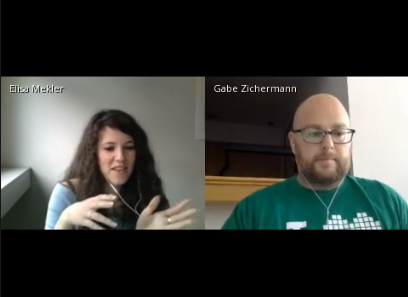
Conducting Gamification Research with Elisa Mekler

We last featured PhD student Elisa Mekler from the Center of Cognitive Psychology and Methodology at the University of Basel to discuss her 2013 research paper on whether gamification elements such as points, levels and leaderboards undermine user’s intrinsic motivation. The results garnered from the study was profoundly surprising as empirical evidence supporting the hypothesis was lacking prior to the research.

Watch the full interview below to learn about:

  • How was the study constructed and designed to examine each mechanism?
  • What were the surprising results generated from the study? Were there outliers?
  • Has there been controversy or surprise generated in academic circle due to the results?
  • How was the process of getting gamification research approved and funded?
  • What are the next steps and opportunities in deepening further gamification research?
  • What ways could gamification industry practitioners help to boost future research?

Watch the video below and be sure to catch our next episode of the Gamification Revolution.


Download this episode (right click and save)

Read More
gamification op-ed

Top Gamification Op-Eds for 2013

Some of our best content has come from guest writers within the gamification community. When it comes to great content, nothing beats real field experience and industry passion to really start and fuel the conversation at large. Read on through to read expert pieces on design and deep industry analysis from experts around the world, including pieces on gamification’s future, a guide for gamifying goals, and the real effect of making badly design gamification systems.

Read More
bartle player types 3

A New Perspective on the Bartle Player Types for Gamification

If you have an interest in gamification, the likelihood is that you have heard of something called Bartle’s Player Types. This is a model that Dr. Richard Bartle created to describe the types of people who played Multi User Dungeon (MUD) games, what they wanted, how they acted and how they interacted. Initially 4 types were identified; Killer, Achiever, Socialiser and Explorer.

Later, he would expand on this and create a more detailed model that included 8 types; Griefer, Networker, Politician, Friend, Opportunist, Scientist, Planner and Hacker.

This model is popular in gamification as it gives a nice basis to consider types of user you may come across. It is worth noting a few things though. The first, this is not a taxonomy, it is a dynamic model that not only explains initial types, but their interactions and evolution over time. The other important point is that this model was designed for MUD games (or MMO’s as we now see them). This takes a couple of things for granted – the biggest being that players are there to play!

Read More