



playing and learning

How Gameplay Transfers Knowledge into Skills

Games are tools for rewiring your brain. When you’re playing a game what you’re essentially doing is building new neurological connections and strengthening them with a process called myelination.

You build new networks that can be used outside the game, then strengthen them through repetition. Now there’s the highly contextualized questions of what skills the game is creating and if its transferable outside that game into the real world. Not all games develop the same skills and not all skills are used in particular fields (these studies are relatively new so expect new insights in the future). Knowledge management has two terms I adopted to understand knowledge transfer from games: adaptation and exaptation, which can acts a lens to understand knowledge transfer from playing games.
Read More
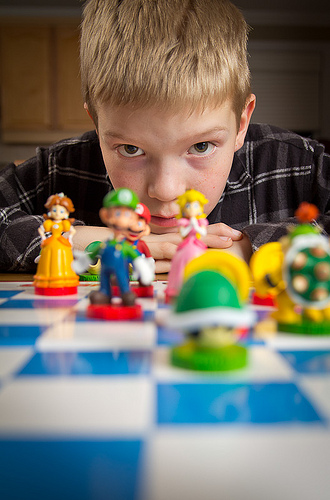
chess praxis

Why Praxis and Play Matter for Practical Learning

Aristotle believed there was two types of intelligence. One is translated as “theoretical wisdom”, which refers to book smarts, and the other is “practical wisdom”, which refers to the ability to apply theoretical wisdom into action. Aristotle gives an example of a student learning geometry: this student will come out of school with theoretical wisdom, but must also learn to apply it into the real world. An example would be to carry out a work of architecture with the geometry he learned in school. We need both of these intelligences to be functional; Praxis gives you this.

Read More

Why Gamification Matters as a Student

Playing games has always been a part of my experience growing up. From playing physical board games to virtual games on consoles and PC, each has its own unique sense of achievement and marvel. Yet, after playing all sorts of games over the years, there was a constant thought that ran through my mind. Somehow, the actions and experiences we undergo in the process of playing games conceals a deeper purpose.

Moreover, as a college student who has spent a considerable amount of leisure time playing video games, the nagging thought that games could possibly have some impact on my learning experience became even more apparent. Aside from the standard way of learning through formal education, could games mechanics observed in games and thinking through the lens of games actually help us in unforeseeable ways? Surely there is something more to video games than just playing it for fun?

Read More