


Developing Literacy Skills with Video Games in Education

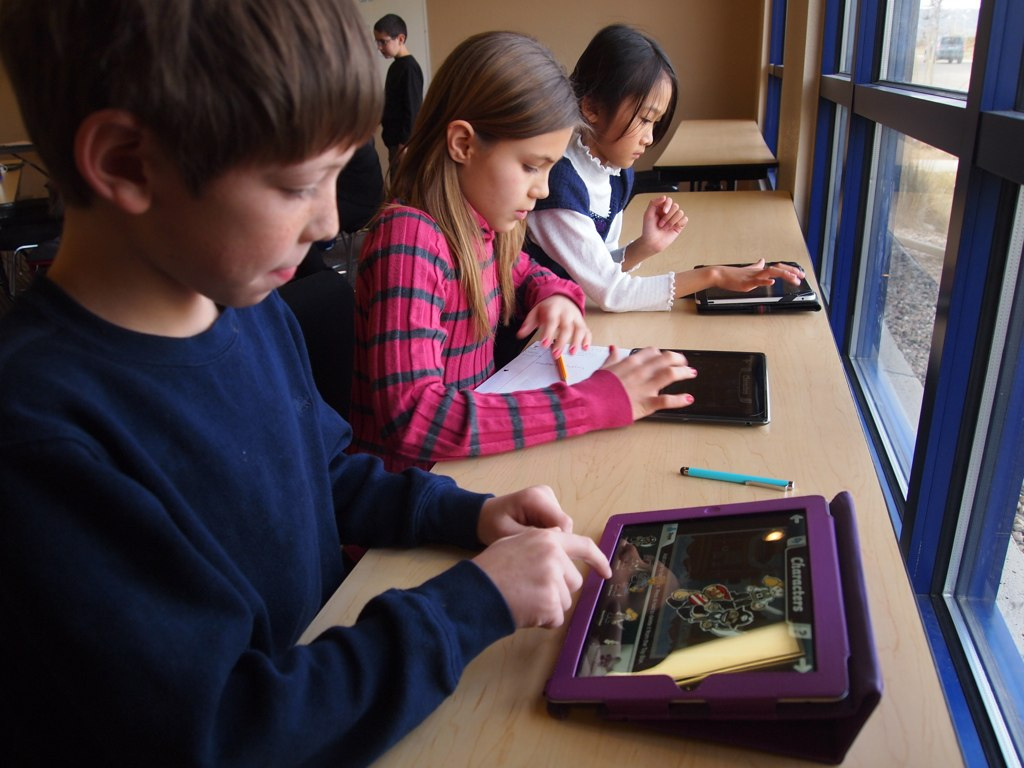
Games in education are nothing new. Because of their strategic nature that they share with subjects such as math, reading and writing, games have been used in the K-12 curriculums for decades. What is new is the use of a specific type of game for these subjects: the video game. This is especially the case with language arts. Like comic books, video games (including computer or PC games) in language arts curriculum have been controversial over whether they’re appropriate learning tools. This is because of the violent and seemingly trivial subject matter that video games have been stereotyped with. Besides this, its very graphic nature, moving pictures, has connoted the video game to be as mind-numbing as television has typically been made to seem. Like TV, the video game has been turned into an enemy of the traditionally more academic medium: the book. But these stereotypes are being broken more and more each day. Video games are showing capability of teaching the necessary literacy skills kids need to survive both in their studies and in the workplace later in life.

Read More

Exploring the Influence of Games in Education with Greg Toppo

Last time, we featured USA Today national education writer and author, Greg Toppo to discuss about his recently released book, “The Game Believes in You: How Digital Play Can Make Our Kids Smarter”. Hailed as the most important book since James Paul Gee’s pivotal work, The Game Believes in You covers how video games are presently being used in the classroom setting and the visionaries who have led the way.

Watch the full interview below to learn about:

  1. Why the education industry has not adopted more games in the classroom?
  2. What schools have done to take advantage of free, well designed game-learning modules?
  3. How does the influence of video games impact the different development phases of children education?
  4. Will the rise of games as a learning tool in the classroom demand new skillsets for teacher?
  5. Are we now able to quantify and determine the impact of video games in education in improving learning outcomes?
  6. How has the education realm reacted the concepts of reward, incentives and performance recognition in the gamified classroom?

Watch the video below and be sure to catch our next episode of the Gamification Revolution.


Download this episode (right click and save)

Read More

Applying Games in Education to Teach STEM

It’s the scene of a crime, set in some indeterminate time in the future. Forensic experts, computer experts, and scientists fill the scene. You are one of them. Your job is to gather clues and recover data from a top-secret research project that somehow goes wrong. It sounds like the plot of a movie. But in fact, it’s a game called Max5 and it’s another example of games being used in education, this time, for teaching science, technology, engineering, and mathemetics – the so-called “STEM” fields.

Read More

Gamified Education Includes Training For Teachers

It’s Mission Possible for 1:1 iPad Use at BHS Think games in education, and the first to come to mind are those for students. However, gamification is also being employed to advance educators in their profession. Consider Mission Possible, a gamified experience developed at Bettendorf High School in Iowa to promote the implementation of 1:1 iPad use…

Read More