



Study: Playing Video Games Can Increase Brain Size

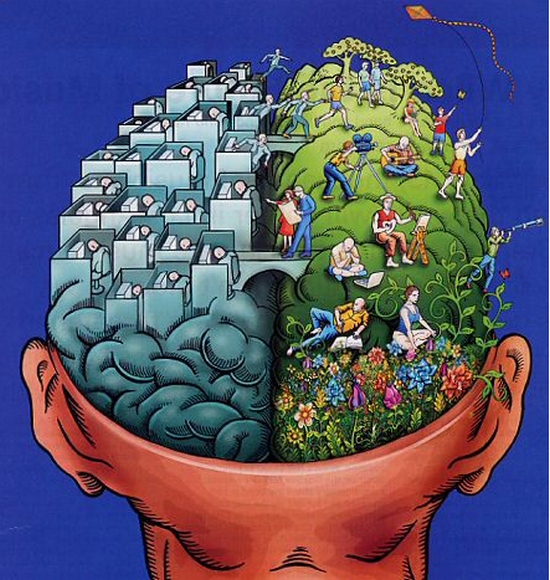
A study published in PLOS ONE, an online peer-reviewed journal, gives quantitative evidence of what effects video gaming has from a physical, biological perspective. At very least, playing video games can alter your brain.

Studying a mix of 152 teenagers, both boys and girls, testing was done on two areas of the brain: the left dorsolateral prefrontal cortex (DLPFC) and the left frontal eye fields (FEF). What the researchers discovered was that these areas, responsible for executive control, strategic planning, and eye movement relative to “visio-spatial attention” were all positively influenced by video game play in a significant way.

Read More

The Winner Effect: How Success Affects Brain Chemistry

There’s a very interesting phenomena in biology I’ve been wanting to link to gamification called “the winner effect.” When any animal, from fish to humans, wins a contest, they have a large release of testosterone and dopamine in the brain. Over time this changes their brains structure and chemical makeup, making them more confident, smarter, and able to take on larger challenges than before.

Read More
playing and learning

How Gameplay Transfers Knowledge into Skills

Games are tools for rewiring your brain. When you’re playing a game what you’re essentially doing is building new neurological connections and strengthening them with a process called myelination.

You build new networks that can be used outside the game, then strengthen them through repetition. Now there’s the highly contextualized questions of what skills the game is creating and if its transferable outside that game into the real world. Not all games develop the same skills and not all skills are used in particular fields (these studies are relatively new so expect new insights in the future). Knowledge management has two terms I adopted to understand knowledge transfer from games: adaptation and exaptation, which can acts a lens to understand knowledge transfer from playing games.

Read More
Andrea Kuszewski gsummit

Andrea Kuszewski on The Science of Motivation: Neurology, Psychology, Gamification

Gamification has proven to be a powerful tool in driving change across nearly all environments—business, personal goals, even education. What is it about gamification that makes it so successful in changing behavior? It isn’t just about points or badges, or earning little gold stars. The best gamification strategies are all about engagement, driven by motivation.

Science tells us that motivation is the single most important factor when it comes to learning and changing behavior—far more important than breadth of skill, or even innate talent. Increase motivation, and you will increase learning—surpassing limits in ways you never imagined—no matter the subject, domain, or context.

Join cognition expert Andrea Kuszewski for a lively, non-technical discussion of the science of motivation, dissecting that ‘magical’ process going on in the brain that is such a critical factor in engagement and learning in this GSummit SF 2013 talk. Watch the full video below!

Also, be sure to subscribe to our YouTube channel to get the latest videos from GSummit SF 2013 as they’re released. You can also download a copy of this presentation by downloading it here.

Read More