




If everyone can agree on one thing, it is probably that commuting is terrible. A repetitive, daily frustration. What if, though, instead of simply getting on the train where you always do and getting off where you always do, you were gaining points, both for yourself and for a team? What if you gained additional points by getting off at a different station and walking a bit more, or for taking a trip on the same system to someplace you’ve never been on the weekends?
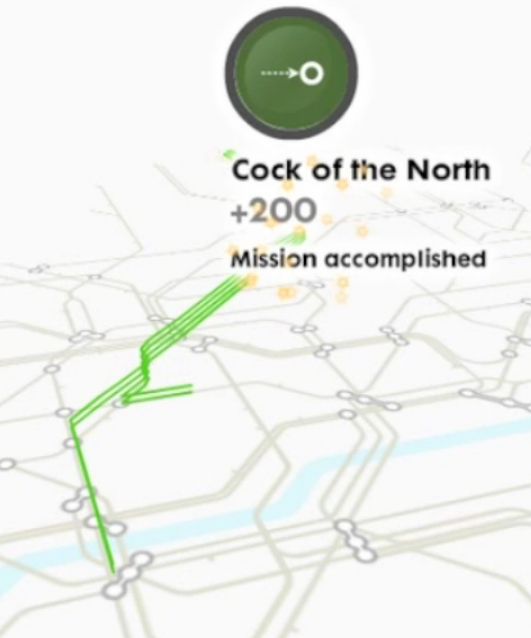
The game Chromaroma, developed by Mudlark Studios, answers these questions and more. It is basically foursquare for public transit–using London’s Oyster Card system, users’ trips are recorded and reported to Chromaroma. There is a lag time around 72 hours, after which a player’s trips appear on their personal page and are displayed in a slick, 3d representation of the city. The recording aspect is only the beginning–players are assigned quests to go certain places or accomplish their commute in a different way, and can “capture” locations for one of four teams, which players join upon signing up.

There are a variety of items that can be used to sabotage stations captured by other teams or defend yours. Players also have the opportunity to learn who else in the game (identified only by username) is passing the same way they are, and might just end up making some new friends. Mudlark has even expressed interest in expanding beyond London, bringing the possibility of competition between cities in addition to teams within them.
 As with all games that involve personal location data, privacy is a concern. The data in the first place is only distributed to Mudlark by permission of the users, and once they have provided the username and password to their Oyster Card account. Player’s journey history is kept private except for what users choose to divulge, which can be anything from simply a “home station” to every detail of their trips via twitter or facebook. Players can also share their whole, ongoing trip history with another Chromaroma user, becoming “fellow travelers.”
Chromaroma is an entertaining way to make the mundane interesting again. A commuter could, on any given day, get off one stop before work and walk an extra ten minutes… but why? Chromaroma is why. The game gives users a reason to explore, an impetus to get out of the daily rut and use the transportation system in a way that doesn’t feel like a chore. Even when you’re on the daily rut, it suddenly feels productive again. I can only hope this is coming soon to a city near me.