


SCOOP! – A Game That Reduces Math Anxiety

According to The Guardian, as many as 2 million children are believed to be affected by Math anxiety in England alone. The symptoms of Math anxiety may vary, but typically when facing a spike of cortisol (stress hormone) by being presented with a math challenge, the mind of the student with Math anxiety triggers symptoms that reflect stress in the body (tension, sense of paralysis, forgetfulness, sweat, etc). The issue silently sabotages the learning experience of students not only in Math, but across other disciplines from the STEM spectrum that use Math. Fortunately, there have been studies and even a game that aims to help these students cope with the symptoms of Math anxiety.

Read More

Spotlight Expert & GSummit SF 2014 Speaker: Andrea Kuszewski

As we move into our next installment of GSummit (June 10-13 in San Francisco), we look at some of our speakers and experts that have helped shape the gamification & user engagement space. This week’s Spotlight Expert is Andrea Kuszewski (@AndreaKuszewski) — Researcher & Manager, Scientific Vortex Group. Andrea has been one of our top rated speakers at GSummit multiple…

Read More

Study: Playing Video Games Can Increase Brain Size

A study published in PLOS ONE, an online peer-reviewed journal, gives quantitative evidence of what effects video gaming has from a physical, biological perspective. At very least, playing video games can alter your brain.

Studying a mix of 152 teenagers, both boys and girls, testing was done on two areas of the brain: the left dorsolateral prefrontal cortex (DLPFC) and the left frontal eye fields (FEF). What the researchers discovered was that these areas, responsible for executive control, strategic planning, and eye movement relative to “visio-spatial attention” were all positively influenced by video game play in a significant way.

Read More

Are Brain Waves the Next Step for The Quantified Self?

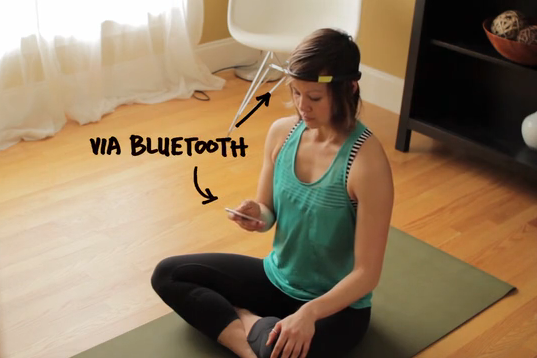
Activity trackers have become very popular among fitness enthusiasts, quantified-selfers, and gadget fans but are they making any sort of difference? I had mixed feelings about the Nike Fuelband when I reviewed it a year ago and Wired thinks it isn’t making you any healthier either. But maybe these glorified bluetooth accelerometers are missing a crucial feature: brainwave monitoring

Read More

Chasing Solar Storms on a Wing and a Game

When scientists at the Royal Observatory Greenwich began analyzing data from the STEREO (Solar TErrestrial RElations Observatory) Spacecraft,  they knew it wasn’t going to be an easy task.  The craft, which uses two near-identical satellites to reveal solar storms in 3D, has already transmitted over 100,000 images of solar activity…almost 25 terabytes of data! It didn’t take…

Read More

The Science and Psychology of Gamification

Michael Wu, PhD, principal scientific analyst for Lithium,  has started a mini-series of blog posts at their Lithosphere blog that delve into the science behind gamification. His first entry broke down the basics, explaining what is gamification, and the distinction between game mechanics versus game dynamics. “[Game mechanics] are principles, rules, and/or mechanisms (much like…

Read More

Games Get Smart

Gamification is the integration of game dynamics into any medium such as website, community and school etc in order to drive a positive response, participation and engagement from a target audience. Without a doubt, gamification will be popular in education and educational technology in 2011. Already we’re seeing many interesting developments within education and the…

Read More

Phylo Lets You Play Like a Scientist

No matter how advanced technology becomes, there will always be some things that human beings just do better, such as recognizing distinctions in colors and patterns and prioritizing complex decisions. In the fields of human biology and DNA analysis, these skills are key to understanding genetic structure. Being able to recognize similarities and make distinctions…

Read More