



AlphaGo Makes Artificial Intelligence a “Go”

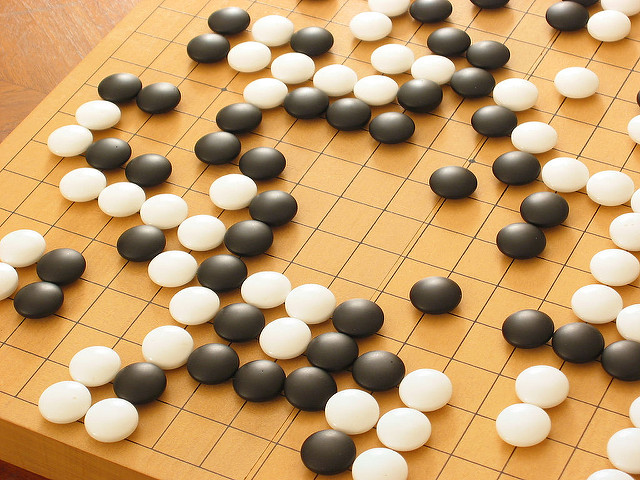
Using Gamified Software to Make Artificial Intelligence a Reality Software that incorporates game-based training has made great strides in helping people improve their performance. It turns out that software can learn, too. A novel software program developed by a division of Google has finally beaten a human at a board game, which marks a breakthrough that carries implications…

Read More

AssessMs: Diagnosing Multiple Sclerosis with Microsoft’s Kinect

When Microsoft introduced its Kinect motion-sensing camera, the technology brought a new element to console gaming. Kinect tracks and captures a player’s movements, then translates them into the play of a game. Now a large pharmaceutical company is partnering with Microsoft to apply that technology for a therapeutic purpose. In a new application of games in health care, Novartis is betting that the Kinect technology can be used to track the progress of multiple sclerosis, and in turn, play a role in developing new treatments for the disease.

Read More

3 Games in education Examples For the Classroom

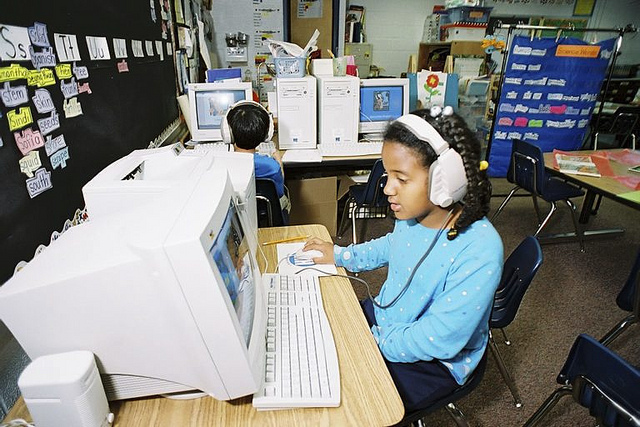
Looking at games in education for the classroom, as a teacher you might wonder if it is right for you. So let’s see if we can’t answer that question, shall we? Every child learns differently. This is a fact. Some children learn from reading a book. Some children learn from hands on experiences. Yes, some children even learn from playing video games. In fact, history teaches us that most children do.

Read More

Video Games Research Turns Into Physical Therapy for Stroke Patients

There are two schools of thought on the best way to help regain the muscle movement and dexterity lost by those who suffer a stroke. Some people believe that patients should not move at all unless in the presence of a physical therapist, according to David Putrino, director of telemedicine and virtual rehabilitation at the Burke Medical Research Institute. But the other, diametrically opposite view, holds that a stroke patient should move as much as possible. Putrino subscribes to the latter view and he found medical evidence to support that position. Dabbling with games in health care, he developed a video game with applications in physical therapy for stroke patients.

Read More

Detecting ADHD Early with CogCubed’s Groundskeeper

ADHD is one of those medical issues that come into the limelight more often than not for those diagnosed with the condition being over medicated, or receiving false diagnosis. ADHD is however a true problem for all ages of people, and in most cases it is both hard to treat as well as diagnose. Games in health are improving the experiences of consumers, and developers at CogCubed are working for those that suffer from ADHD.

Read More

Exploring Career Options with NCSU’s Gamified Course

For some college students, the hardest academic choice they need to make is selecting a major. The difficulty is compounded by their awareness that what they study in college has a strong bearing on what they will do for their career. North Carolina State University has turned to gamification to help students with these choices. By making a game part of the education process, university officials say that they can help students make more informed choices about their college studies and their future careers.

Read More

5 Examples Gamification in Consumer Engagement Space

The gamification market is estimated to be worth about $2.8 billion, having increased 10 fold over 3 years. Widely used in staff training or education, there is now a growing trend toward adding gamification to drive consumer engagement and loyalty. The online environment vastly increases the possibilities for the use of gaming to engage customers . You can turn your instructions into simulations that can demonstrate your products. Virtual tours have become popular for the travel industry and real estate industries. Virtual environments can also apply to the use of products. Customers can try products in a virtual environment and be rewarded for their efforts.

Read More

Applying Games in Education As Learning Models

With recent incentive from President Obama, games in education are taking off anew. According to a recent article from Gamespot, the president has just initiated a $4-million plan called “Computer Science for Everyone” which may look toward game models as a learning method. To quote Whitehouse Deputy Director Tom Kalil, “Certainly video games are an entry point for some young people. The reason why some kids might get interested in computer science is because they like to play them, but they also want to make them.”

Read More
Zamzee

Boosting Children’s Physical Wellbeing with Zamzee

Health care experts warn that child obesity rates are rising to alarming levels. With the increase in obesity-related medical conditions, such as diabetes, it’s no wonder that parents and health professionals alike are looking for ways to keep children healthy. A good diet is one part of the equation. But an equally important part of child health is physical activity. Gamification startup HopeLab developed a technological way to keep kids on the move while tracking this activity at the same time. The company’s gamification software is called Zamzee.

Read More