

Badgeville Welcomes Jon Shalowitz as New CEO
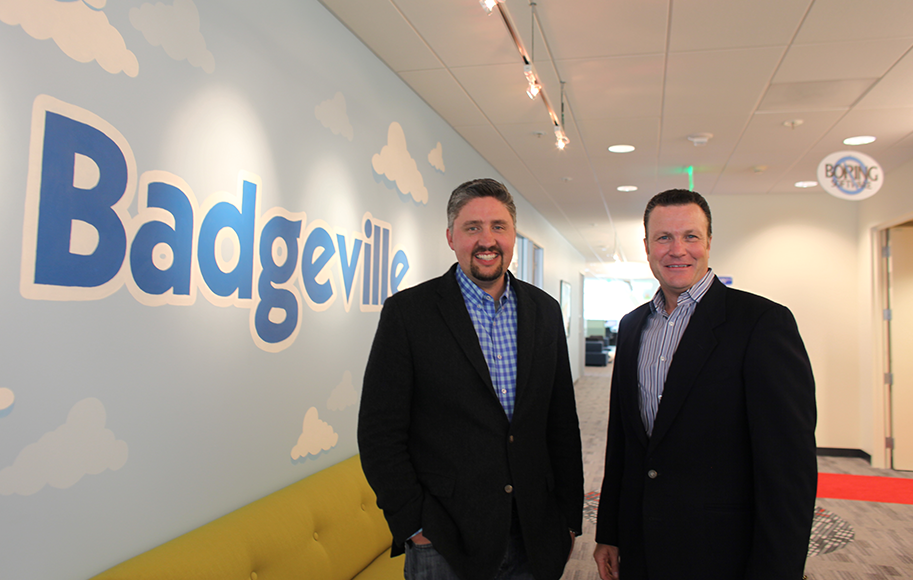
Jon Shalowitz’ arrival heralds a new direction for the number one gamification platform in the world. Badgeville’s new CEO stepped into office April 7th with a public introduction on the company blog.




Jon Shalowitz’ arrival heralds a new direction for the number one gamification platform in the world. Badgeville’s new CEO stepped into office April 7th with a public introduction on the company blog.

Sometimes when you want to gamify in a large organization, the hoops and hurdles you need to surpass may seem daunting. Sascha Goto is an Senior IT Manager at McKinsey who was able to successfully implement his own low-tech gamified system and was able to share some wisdom for us all on how we might approach doing the same thing.
He joined us on our weekly Gamification Revolution webshow with Gabe Zichermann and talked about:
Watch the full interview below and catch this week’s special double-guest episode on gamifying loyalty with Maritz’ Barry Kirk and Bill Hennessey this Thursday at 1 PM ET.

Is Gamification Overrated? Or are we looking at it wrong? In 2011, Gartner predicted that more than 70% of global 2000 organizations would have at least one gamified application by 2014. A year later, in Nov 2012, Gartner also predicted that 80% of the current gamified applications would fail to meet their business objectives, primarily…

Branch Banking and Trust Corporation (or BB&T) is a North Carolina-based bank that operates in more than 1,800 financial centers across the United States. Their services include commercial and retail banking as well as insurance, investments, mortgage, corporate and consumer finance.
BB&T has recently proved to be innovative through the addition of a mobile gaming application into their employee training program, with the purpose of teaching valuable leadership skills based on the premise that Beliefs influence Behaviors, which lead to Results, which influence beliefs, and it cycles on…

In today’s business environment, managers are constantly pressed to produce results, usually through industry-specified KPIs – setting challenging targets to be achieved on a day-to-day basis. Methodologies, such as MBO (management by objectives) and CPM (corporate performance management) aim to align the managers with their business’s goals. Targets are set and feedback is collected through scorecards and dashboards.
Stemming from the line of thought that “you can only manage what you measure” and “what gets measured gets done”, managers are put in the position of not only constantly evaluating their employees, but also being appraised themselves.
There is a strong correlation between a successful company and an effective goal setting process.

By now, most executives and HR professionals know that employee engagement is both important and woefully lacking. But despite all the time and money invested into engagement initiatives, many organizations still aren’t moving the needle. Why?
Whenever I ask business leaders, “Whose job is engagement?” I usually hear one of these answers:
Both good answers, but partial answers.
According to IDG Research 43% of engagement comes from intrinsic motivation, by definition factors that are completely outside the influence of company mangers.
What is missing from many efforts to increase employee engagement, are the individual employees themselves.

One of the questions I’m asked most frequently is: “What are the biggest mistakes/risks/pitfalls of Gamification?” My answer almost always includes a cautionary note about the risks of compelling people to “play” gamified experiences, because using force reduces a sense of agency. This is a trap many companies fall into when they gamify an employee process. No matter how much money they spend building an amazing, engaging system, many HR folks fail to consider how they’ll get users to participate beyond “they have to”, or “this is the new process.”
New gamification research out this week from UPenn’s Wharton Business School puts a spotlight on this thorny question, looking at the efficacy of sales team gamification when it’s optional vs compulsory through a primary research project at a high-growth tech startup. The results indicate that gamification is effective at improving employee satisfaction, but if its compulsory it may actually reduce their overall affect.
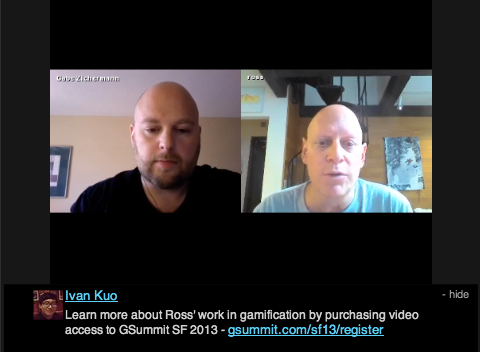
The Gamification Revolution is the only live gamification webcast featuring Gabe Zichermann and fellow gamification experts every week. Join us and have all of your gamification questions answered by these experts.
This past week’s guest was Ross Smith, Director of Test at Microsoft. Ross Smith was responsible for the creation of the language quality assurance game, making the process significantly faster and more effective. Learn more about Ross’ current projects as a part of 42projects‘ management innovation team by watching Gabe Zichermann’s full interview with Ross.

Many people think of gamification as a consumer targetted model. While gamification techniques are particulary apt at increasing consumer involvement, they can also be applied to the employee management process for improvement.
Maintaining a consistent working attitude by employees is important for any business to keep healthy productivity. It takes effort by management to encourage employees to work for higher goals. It requires investment by management to identify where employees struggle in the process. Utilizing a gamification model within the management process can help businesses save time and reduce costs while increasing the bottom line.

Parents might have a tough time arguing against videogames if their kids begin to learn about all of the potential benefits from playing them.
Just a few days ago, we reported on a study which showed that dyslexic children could improve their reading skills and attention span by playing fast-paced videogames. Now another study has emerged, which has shown playing first-person shooter videogames like Call of Duty can improve multitasking abilities.

The Gamification Revolution is the only live gamification webcast featuring Gabe Zichermann and fellow gamification experts every Thursday at 1 PM EST/10 AM PST/1800 GMT. Join us and have all of your gamification questions answered by these experts.
This week’s guest is Gartner Research Director, Elise Olding! Elise has been heavily studying the science of motivation and engagement with the power of people. In this week’s episode you can be sure to learn about:
This was a great week filled with user-participation and questions! Check out the full video below:
You can now catch the Gamification Revolution every Thursday at 1PM EST/10 AM PST/1800 GMT.