



Sudarshan Gopaladesikan

How Gaming Prepares Us for Success with Failure

The Grand Theft Auto Franchise (GTA), notoriously known for promoting aggressive behavior, can also be seen as a virtual driver’s ed teacher, and possibly even a better deal; one game purchase gets you infinite lessons.

First thought that comes to mind when I hear ‘Grand Theft Auto’ is badass. Although the game typically encourages the player to break the rules, a recent Kotaku article has shown the game’s more positive side. The post explains how GTA has taught someone to drive, and I believe this is a result of two things: the ability to fail without fear and the depth of game design.


Read More

The Road Show Puzzle Game Improves Coginition Speed For Seniors

Games always don’t need the flashy graphics paired with capturing audio to make it engaging. Clear objectives and a desire to compete against the self is another effective method for improving skills through a game. According to Mashable, Researchers at the University of Iowa have shown this through their recent success through Road Show, a visual puzzle game aimed at improving senior citizen cognition.

Read More

A Lesson from Valve on The Importance of Innovation

In the early 90’s, Gabe Newell, a Microsoft employee, commissioned a survey to see what was actually installed on people’s PCs. To Newell’s surprise, the most installed software actually was not Windows. Windows was only in second place at the time. What was the first? First place actually belonged to to id Software’s Doom video game. It was at this time Gabe left Microsoft to start Valve, one of the best video game development companies in the nation. They are the creators of the famous Half-Life and Portal series. They also have their own online game distribution platform called Steam, which has over 50 million users.

Gabe started Valve because he found the results of the software survey to be very telling. How could dozen people in their mid-20’s manage to get their software installed on more PCs than the product made by the largest software company in the world? Simple. The nature of productivity has changed.

Read More

Turning Big Data into Smart Data: Nike+ Drives Valuable Insight

It was 2006 when Nike turned the most simple of sports into a key driver for adopting a healthier lifestyle. 7 years later, Nike+ now has about 7 million users. Socially rich data is key for any quantified self project, and running is no exception. The success of Nike+ is an example of how measuring performance is useful to gaining key insight. For users, they get to understand their running patterns better. For Nike, servers worth of Nike+ data can be turned into strategic business decisions to improve company performance.

Read More

Emory Uses Halo To Teach Women’s, Gender, and Sexuality Studies

Starcraft II teaches game theory and multivariable calculus. World of Warcraft gives insight to instructors on how they should structure the classroom environment. Minecraft has even become mandatory in a Swedish school’s curriculum as it teaches urban engineering concepts. To add to this growing list of games for education, Emory PhD Student Samantha Allen has incorporated Halo into her lesson plans for teaching intersectional theories of oppression for her Women’s, Gender, and Sexuality Studies (WGSS) introductory course. This is what I would call an interesting juxtaposition as it bridges the gap between the macho Halo protagonist, Master Chief with sensitive global issues of rights and accessibility to all.

Read More

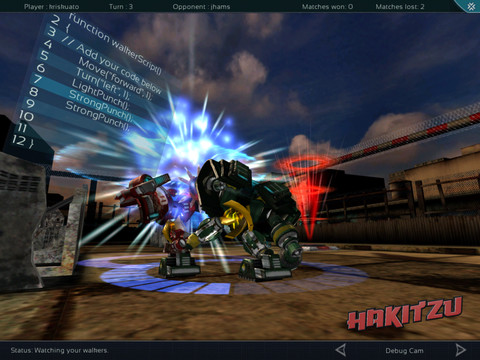
Hakitzu Excites Children to Become Black Belt Coders

In 2009, Rovio launched Angry Birds, one of the first games to make use of the mobile platform. In 2013, this infographic claims that there are 263 million active monthly users, and every other new cell phone purchased has the game downloaded onto it.

Kuato Studios, a development studio created from SRI International (the people who sold Siri to Apple) and Horizon Ventures (VC firm responsible for their investments in Facebook, Spotify, and Summly), is looking to take advantage of mobile platforms to a further level. Instead of crashing birds into objects, they want to use battle robots to make learning how to code fun. Wait, learning how to code can be fun?

Read More

Why Gamification Is Important as a Young Professional

When I first heard of gamification I was working at a big data internship with Infosys in Bangalore, India. My mentor explained it to me as “bringing games to the world to drive creativity, production, and behavior change.” I remember calling my parents shortly after to tell them, “Remember all those hours I spent playing Donkey Kong Country, Super Mario, Metroid, and FIFA. Well, I don’t think it is fair for you to yell at me anymore for wasting my time. Have you heard of gamification? Well let me tell you about it…..”

Read More

GCo’s Picks: Games for Training Skills at GSummit 2013

Adobe and Delta Air Lines both use gamification to drive engagement with their products, which in turn produces a kind of learning and subsequent new behavior for the engaged users. Learning is taking place in this regard but Adobe and Delta have managed to use gamification for an even higher level of learning.

Rather than creating general classes for learning, Adobe and Delta have successfully been able to use games to train people for tasks they want to accomplish and they will both be represented at GSummit 2013 to discuss their training games.

Read More

Where Does Gambling Fit in Gamification: Legal Issues and a Success Story

Gamblification is the intersection of social gaming and gambling. Many casino and card games make use of a human’s gambling instincts to lure people into deep engagement. Although real money is used to purchase chips to be used in these games, the chips are not redeemable for money. However, some social games provide venues where in-system virtual currencies can be exchanged or raffled for virtual goods. Some systems such as Virgin Gaming allow console players (PS3, XBOX) to wager real money against others for big cash prizes. But It doesn’t end there.

Read More

6 Steps to Successful Loyalty Programs that Win

Reward programs are nothing new. They all work under the simple premise of “more you do business with us, the more we will recognize your loyalty in the form of discounts and/or prizes.” For example, airlines give out frequent flyer miles that can be redeemed for free trips depending on how many times you have flown with that certain airline. Rewards program extend to any and all retail, from airlines to Starbucks to your local gelato store. However, did you know that in 2011, it was reported that Americans accumulated $48 billion dollars on loyalty programs. What’s worse, $16 billion of that $48 billion went unredeemed. Would you ever want to throw away a third of your money?

Read More

Prominent Gamifiers: Andrea Kuszewski on the Science of Gamification and Motivation

What makes receiving a badge for completing a task so exciting? Why does seeing a progress bar almost full make us itch until we finish it? Gamification—the combination of game-design principles and elements—implements cognitive psychology and decision-making theory as its scientific foundation. If gamification were stuffed shells, science is the shell, and everything else is stuffing.

Read More

GCo’s Picks: How Microsoft’s Ross Smith Redefines Productivity with Games

GamificationCo has asked some its editors for their top sessions picks for GSummit SF 2013. Here is Sudarshan Gopaladesikan’s most anticipated session for GSummit:

I love risk-taking. As a junior in college, I have the notion that the workforce won’t allow me to take any risks because safe, but sure investments/ideas are less unpredictable to a company’s profits. Looking through the sessions at GSummit (all of them are great!), Ross Smith–Director of Test at Microsoft–will be speaking on how trust among colleagues can foster individual innovation, productivity, and risk-taking.

Read More