

Duolingo: Game Based Learning of Languages
Imagine learning in 34 hours what would traditionally take an entire semester. Duolingo, a game based language-learning program, provides a platform for doing just that.




Imagine learning in 34 hours what would traditionally take an entire semester. Duolingo, a game based language-learning program, provides a platform for doing just that.

Gamification continues to grow in popularity as an innovative solution to problems in a wide variety of fields from education to healthcare. This rising interest has led to a number of published academic studies all asking the same question: Does gamification really work?

Games in education is a hot topic these days. Teachers are trying to figure out how to use video games to benefit the education of their students. That’s difficult when entertainment games and educational games seem to exist as separate industries catering to separate worlds. But somehow, it worked in the 90s.

Quick takeaway: You can’t design a single-stage incentive and expect a long-term behavior change (enter: gamification). Also, designing behavioral interventions without understanding prior work in psychology is dangerous and possibly unethical. For years, I’ve been deeply fascinated by behavioral economics. I love the discipline’s emphasis on incentive and reward, and the increasing realization by the “capital-E” Economics…

It’s the scene of a crime, set in some indeterminate time in the future. Forensic experts, computer experts, and scientists fill the scene. You are one of them. Your job is to gather clues and recover data from a top-secret research project that somehow goes wrong. It sounds like the plot of a movie. But in fact, it’s a game called Max5 and it’s another example of games being used in education, this time, for teaching science, technology, engineering, and mathemetics – the so-called “STEM” fields.

The notion that games are more than trivial toys that waste time is a radical one and has been confronted with a lot of controversy. The efforts of teams of talented individuals are being recognized. These innovative approaches to game playing are now being followed by the actions of powerful companies in the game industry.

An upcoming gamification startup hopes to make the college application and decision making process less daunting for families and students. In spring 2015, CEO Elena Cox will release Vibeffect. An article written for DCInno.com describes Vibeffect as a startup that offers “predictive analytics and fun gamification that teens love to create a guidance framework.”
Video games are making a huge boom in today’s market. In fact, video game sales have been more than doubling box office profit intake. With all this excitement, it’s understandable that educators have begun to see the potential of video games in the classroom and as learning tools. Justin Ballou, a Boston-area high school teacher, founded a software-startup which focuses on education called Socrademy.

When the Rollins School for Language and Learning made it their goal to create free, online education courses make sure at-risk students were reading grade-level by third grade, they faced some serious challenges. Their Read Right from the Start program had the tools to help them meet their literacy goals, but they needed to get teachers of various…
Video Games, or now more correctly titled “Interactive Experiences” have, in the last few years, grown into far more than just toys. Advancements in technology, and the understanding of the psychological impact that play has on the human brain have exponentially grown since their debut in the 1970s. Play is not reserved to children alone….

In most homes where a pre-teen or teenager resides you can probably find some video games lying around somewhere. Even some adults enjoy sneaking away to play these games. What at first appears as an idle waste of time is now seen in a different light. Video games in education have gained some of the legitimacy that they never enjoyed before.
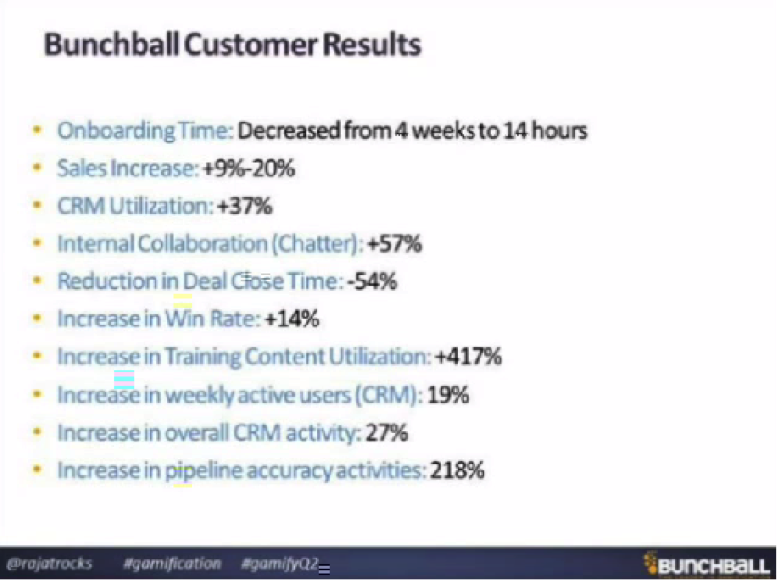
Gamification is the newest corporate buzzword. Organizations slap points, badges, and leaderboards on customer or employee engagement programs, many times only to see the initiatives fail. It’s important to examine the root causes of these failures, in order to learn how you can make your gamification program succeed.

Third graders are rarely as gifted as the one named Cordell Steiner. This particular third grader is a proponent of game based learning in the classroom, and he makes such a powerful case that he was asked to speak at a Ted Talks convention. Some of the points that he makes are hard to ignore.

Last time, we featured chief reporter on People and Power from Al Jazeera English, Juliana Ruhfus in discussing the current affairs program’s interactive documentary, Pirate Fishing. Blending investigative journalism practices with gamification mechanics, the interactive tool introduces users about the multi-million dollar illegal fishing trade affecting West Africa’s poorest people.
Watch the full interview below to learn about:
Watch the video below and be sure to catch our next episode of the Gamification Revolution.
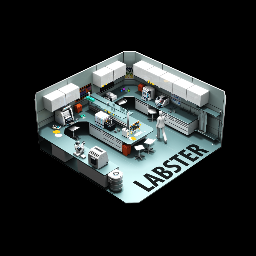
Students sit through hours and hours of boring and unengaging lectures. Professors ramble on to an audience of students sleepily typing away on their smart phones while checking Facebook, Twitter and pretty much anything else that has nothing to do with the lecture. How do we fix this? Enter Labster! Founded in 2010, Labster (@labster)…