

Big Plays in Enterprise Gamification – September 2013
In the world of enterprise gamification, here are the big plays of funding, partnerships, and events for September 2013, featuring Badgeville, Gigya, LevelEleven, and the EGF.




In the world of enterprise gamification, here are the big plays of funding, partnerships, and events for September 2013, featuring Badgeville, Gigya, LevelEleven, and the EGF.

Lately, there has been a lot written about gamification and how it can lead to increased levels of engagement, whether it’s through motivating sales team to increase revenue, engaging employees to live healthier lifestyles, or incentivizing customer advocacy. Looking more closely at the customer advocacy aspect of gamification, you may be fooled into thinking that the main benefit is to stimulate brand loyalty. Although brand loyalty does hold high significance and is vital to any business’ success, there is another important advantage for your organization from using gamification in those regards – SEO. The basic game mechanics used in gamified processes all lend to boosting your search engine optimization and this article will tell you how.

Are you as engaged as a zombie?
Strengthened by its early success, gamification is now becoming a staple in the arsenal of world-class companies everywhere. But it only represents one tool in addressing a larger business challenge that remains unanswered: How do you comprehensively manage user behaviors across all your digital properties to fight the engagement crisis. In this talk, Badgeville’s Chief Strategy Officer Kris Duggan will discuss the engagement challenges faced by 21st century enterprises, and how they can leverage gamification, along with other key engagement mechanics, to fight them in this session from GSummit SF 2013
Be sure to also subscribe to our YouTube channel to get the latest videos from GSummit SF 2013 as they’re released. You can also download a copy of this presentation by downloading it here.

In the ever involving world of marketing, gamification has come to be regarded as one of the most effective and profitable methods in use today. Granting brands the ability to have a greater influence on consumer behavior, it is an effective strategy for garnering long term consumer interest. In recent years the trend towards employing gamification has been on the increase. While more and more companies are utilizing this relatively new method of engaging its customers, many have already implemented it into their marketing strategy and seen tremendous benefits.
One such company that has been successfully using gamification for years is eBay, the internet’s number one auction site.
Whenever I start talking about gamification, one of the first questions that I get asked is this: how is it different from loyalty programs?
As part of my MBA in the Management of Technology and Innovation at Ryerson University, I was tasked with writing a major research paper on a business topic of my choosing. As a gamer, I was extremely interested in the rising trend of gamification. Aside from the question about loyalty programs, a lot of small startups I talked to were interested about this “gamification thing they heard of”, but really had no idea where to begin or how to use it. When I came across the CARROT todo list, I was amazed at its simplicity and execution. It pushed me over the edge, and made me really want to find out exactly how gamification was being used.

By now, most executives and HR professionals know that employee engagement is both important and woefully lacking. But despite all the time and money invested into engagement initiatives, many organizations still aren’t moving the needle. Why?
Whenever I ask business leaders, “Whose job is engagement?” I usually hear one of these answers:
Both good answers, but partial answers.
According to IDG Research 43% of engagement comes from intrinsic motivation, by definition factors that are completely outside the influence of company mangers.
What is missing from many efforts to increase employee engagement, are the individual employees themselves.
Today’s loyalty programs are like the Bruce Willis character in the movie The Sixth Sense. They’re dead, they just don’t know it yet. They have failed at creating actual loyalty, at keeping up with a rapidly changing world, and at engaging all the constituents that matter, a company’s customers, partners and employees. It’s time to take back the word “loyalty” and make it actually mean something. By utilizing the Big Data generated by our constituents as they interact with us, combining it with an understanding of human motivation, and using the data-driven motivational techniques of gamification, we now have the power to motivate, to engage, and to create true loyalty – Loyalty 3.0.
Check out Bunchball’s Chief Product Officer Rajat Paharia as he explains the the next evolution of loyalty from GSummit SF 2013 .Be sure to also subscribe to our YouTube channel to get the latest videos from GSummit SF 2013 as they’re released. You can also download a copy of this presentation by downloading it here.

The gamification community in NYC came together last night for our first GSummitX event fully focused on loyalty marketing. To start things off, Gilt Groupe’s Jeff Bobula (Program Manager) delivered an educating talk on Gilt’s new loyalty program, Gilt Insider. Then, we all engaged in our Play for a Cause to help solve NYC’s composting issue.
For software company Autodesk, the 30-day software trial period offered to customers is critical. Trials are a key part of the customer’s purchase decision and account for a significant percentage of the company’s website traffic. So when the 2013 version of the Autodesk(r) 3ds Max(r) software released, the company turned to digital marketing agency Resource to create a fresh and innovative way to increase trial conversion. Known for consumer research and innovation, Resource developed an online game called “Undiscovered Territory” that took customers on an entertaining and educational journey. The result was a significant increase in trial downloads and usage and the campaign earned a Forrester B2B Groundswell Award.
In this session from GSummit SF 2013, Dan Shust, VP of ResourceLAB at Resource and Dawn Wolfe, Sr. Manager of Integrated Marketing Programs at Autodesk will share insights on what made “Undiscovered Territory” such a hit and why gamification is a marketing approach they will continue to use in the future.
Be sure to also subscribe to our YouTube channel to get the latest videos from GSummit SF 2013 as they’re released. You can also download a copy of this presentation by downloading it here.

A common feature of nearly all gamification implementations is the presence of a reward system. People are motivated by rewards but do they always have to come in the form of a cash prize or fancy gadget? Suchit Dash of ifeelgoods believes it doesn’t have to be.
Tangible Rewards come in many shapes and sizes, and though they may not scale super well, they can be transformative. See how you can use non-discount, tangible rewards to drive user loyalty and engagement in this fast-paced talk from rewards expert Suchit’s session at GSummit SF 2013.
Be sure to also subscribe to our YouTube channel to get the latest videos from GSummit SF 2013 as they’re released. You can also download a copy of Suchit’s presentation by downloading it here.

Nascent technology markets like gamification often see a proliferation of vendors. In part this is due the low barriers to entry because the capital needed to develop SaaS-based product is minimal because of cheap infrastructure as a service (IaaS) and platform as a service (PaaS) offerings as well as inexpensive development tools.
Startups are likely to target a particular niche within a nascent technology like gamification when developing their initial product because it is easier to identify likely early adopters to sell to and to create differentiation. Avoid this trap by being more picky with your selection process.

Gamblification is a term that we have adopted to describe the intersection of social media and gambling. Although it may not seem like it at first, many Gamification systems walk a dangerous line, giving users the option to gamble with currency in their system. Given the complexity of the legal issues around this concept, it is not always easy to ensure that one does not cross the line. When is gambling in gamified systems ok, and when isn’t it? What are some of the risks you should consider, and what are the basic legal considerations and concerns affecting gamification in general? Join legal expert James Gatto for this fast-paced, crowd-favorite session on some of the key legal issues every gamified system operator needs to know in the video below.
Be sure to also subscribe to our YouTube channel to get the latest videos from GSummit SF 2013 as they’re released. You can also download a copy of Jim’s presentation by downloading it here.
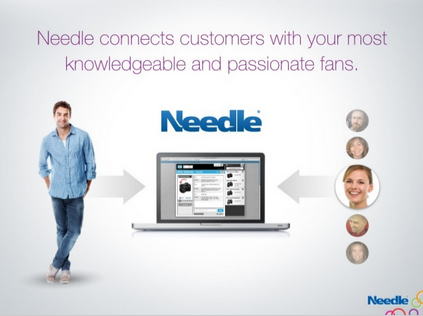
Needle CEO and founder, Morgan Lynch, has created a remote online customer sales chat platform that implements gamification to encourage remote workers to excel, using social influence to sell. He is an expert in using game mechanics in a non-game context to incentivize remote workers to achieve success by clearly defining benchmark performance goals – creating healthy competition as they compete for points toward free products and more. Needle’s system is proven to help brands boost their online sales and strengthen the online customer experience.
During this session, Morgan explains how using gamification with his untraditional online sales support platform has improved productivity and performance, while driving millenial workers in unique and unprecedented ways.
Be sure to subscribe to our YouTube channel to get the latest videos from GSummit SF 2013 as they’re released. You can also download a copy of Morgan’s presentation by downloading it here.
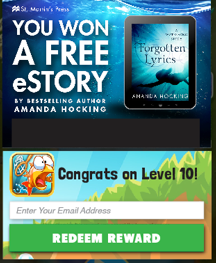
The challenge of monetization is about more than dollars and cents – it is about continuously enhancing the user experience. Many developers steer clear of monetization solutions, fearing that they will turn off users and cause drops in retention and engagement rates.
However, when ads are presented as personalized they can have favorable implications for user experience and engagement. Below, I will share some data that demonstrates a positive correlation between the implementation of such ads and an increase in overall engagement.
In order to provide some context, PaeDae is a premium ad network that leverages a “reward ad spec” to help app developers monetize. One of the biggest contributors to our success is our commitment to ensuring that reward ads look native, and blend seamlessly into a user’s overall game or app experience.
Restaurant.com is the largest source of dining deals in the nation. Despite the huge inventory of amazing offers, the company needed a way to create, sustain and socialize customer loyalty. So they turned to gamification with amazing results. Along the way, Restaurant.com learned some of the best — and worst — ways to create customer loyalty with gamification.
Learn from their lessons as Restaurant.com CRM Manager, John Reynolds, and Badgeville Producer, Zachary Bodnar, walk us through some design principles and lessons learned for achieving loyalty success in ecommerce.
Also, be sure to subscribe to our YouTube channel to get the latest videos from GSummit SF 2013 as they’re released. You can also download a copy of John’s presentation by downloading it here.