top health

The Best of Health Gamification in 2013

In our next collection from the best gamification stories of 2013, we have a cornucopia of healthy gamified applications for everyone to check out. Gamification Co readers were most interested in seeing new health apps in 2013 and we have about 20 of the top health apps for you to check out here.

Here’s to seeing even more at 2014! (Especially with all that new stuff at CES)

Read More
playing and learning

How Gameplay Transfers Knowledge into Skills

Games are tools for rewiring your brain. When you’re playing a game what you’re essentially doing is building new neurological connections and strengthening them with a process called myelination.

You build new networks that can be used outside the game, then strengthen them through repetition. Now there’s the highly contextualized questions of what skills the game is creating and if its transferable outside that game into the real world. Not all games develop the same skills and not all skills are used in particular fields (these studies are relatively new so expect new insights in the future). Knowledge management has two terms I adopted to understand knowledge transfer from games: adaptation and exaptation, which can acts a lens to understand knowledge transfer from playing games.

Read More
chess praxis

Why Praxis and Play Matter for Practical Learning

Aristotle believed there was two types of intelligence. One is translated as “theoretical wisdom”, which refers to book smarts, and the other is “practical wisdom”, which refers to the ability to apply theoretical wisdom into action. Aristotle gives an example of a student learning geometry: this student will come out of school with theoretical wisdom, but must also learn to apply it into the real world. An example would be to carry out a work of architecture with the geometry he learned in school. We need both of these intelligences to be functional; Praxis gives you this.

Read More
link training

How Simulation Training Amplifies Learning with the Process of Praxis

Gamification practioners should not only study how to create a great game, but also how gamers acquire skills from using complex games outside play. A great example of this comes from the game of chess. In order to become a Grandmaster at chess you must read entire libraries on the theory of the game, play it, and intensely reflect on your performance and those of others. This loop of theory, play and reflection is called Praxis.

Read More
training blocks

How Game Based Learning is Making Training Better

A great deal of research has been done examining how game based learning has been used with phenomenal success in the world of education to enhance students’ learning experience and now more and more research is being done on how the corporate world is utilizing game based learning to increase job satisfaction, enhance training programs, improve productivity, increase sales, and ultimately drive profits.

Read More
narrative in gamification

Embracing Paradoxes and Narratives in Education

How Gaming Keeps Us Learning for Longer “In the realm of strategy, only contradiction and paradox work. Common sense and straightforward linear logic always fails” – Edward Luttwak According to Charles Handy, success belongs to those who learn to embrace complexity by reconciling the contradictions of this world. Gabe Zichermann gives an example of these contradictions with…

Read More
learning with play

How Gaming Prepares Us to Learn More in Life

“It turns out video games are just a Trojan horse for studying interest-driven learning” – Constance Steinkeuhler

Now here’s an ironic twist: for all those decades in which academia has been demonizing video games by claiming its taking time away from teenage reading, it now turns out gaming has become one of the main catalysts for teenage reading in boys. I’m not referring to text inside the games nor am I suggesting gamifying reading with points, badges and leaderboards either. I’m saying teenage boys involved in complex games called Massively Multiplayer Online games are taking time aside from their game play to spend hour’s deeply analyzing and creating texts whose difficulty was rated to be college level or higher by experts. Reading and writing are back!

Read More
game based learning training

How Game Based Learning Can Be Used For Training

The concept of game based learning was developed around ten years ago, and it has become a very popular one in various circles. A very good example of this is in business. Traditionally, business has been associated with boredom, since most of the things done in the name of business are basically routine. This means that there is a lot of room for one to lose their focus and drive especially if they have to do repetitive tasks. Doing training in business also poses challenges to many, since it usually involves the use of very abstract concepts and terms. However, game based learning techniques are starting to emerge as a solution to some of these solutions, specifically for training.

Read More
dementia simulator in austrailia

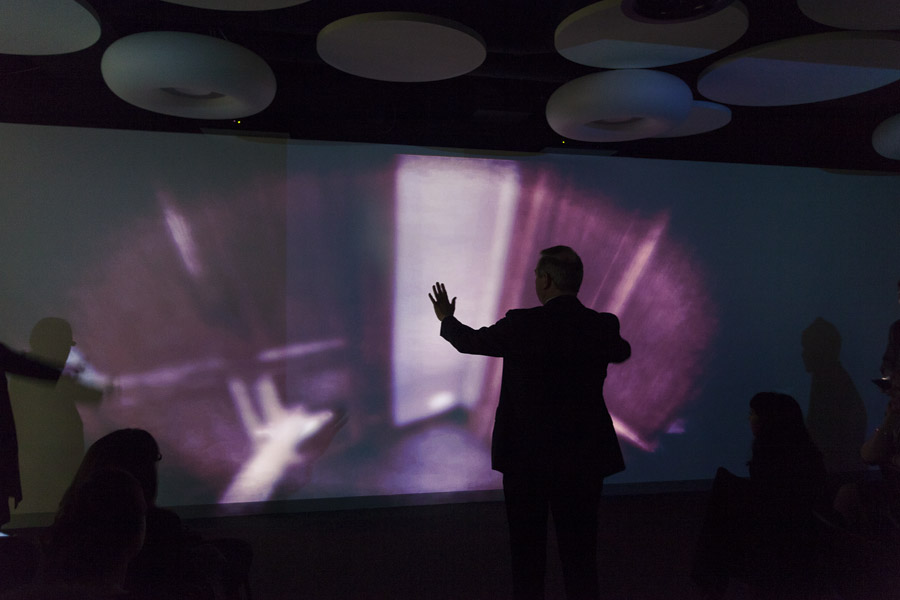
New Australian Facility is Teaching Dementia-Care By Simulating It

Alzheimer’s Australia Vic has opened up Australia’s first dementia learning center to educate people about the effects of dementia through virtual-reality simulations, according to Australian Ageing Agenda.

The simulation’s primary goal is allow students to envision the cognitive and perceptual difficulties that dementia sufferers deal with in their daily life routines.

Read More
kevin werbach on teaching gamification at coursera - gsummit sf 2013

Kevin Werbach on Teaching Gamification at Coursera

Surely you must’ve heard of Kevin Werbach’s Coursera Course on gamification? (The next Coursera semester starts Jan 27th 2014)

Gamification is a hot growth industry, with billions of dollars in revenue and thousands of new jobs set to be created in the next decade. To accomplish this, organizations of all kinds will need to train and educate leaders of tomorrow on this critical discipline. But how do you teach a topic where core concepts are in a state of flux, examples and patterns are evolving rapidly and learners expect the entire experience to be fun and rewarding? Join Professor Werbach, teacher of the massively successful #Gamification12 MOOC as he discusses the hard-won lessons of teaching Gamification — and how this understanding can make any training, education or development process more successful for your organization. In this GSummit 2013 video expect to learn

  • Opportunities and dangers in the gamification of learning.
  • Techniques for effective gamification in educational settings.
  • How game thinking produced the highest engagement rates of any course on the Coursera massive online platform. (It’s not what you think!)

Watch the full video below! Also, be sure to subscribe to our YouTube channel to get the latest videos from GSummit SF 2013 as they’re released. You can also download a copy of this presentation by downloading it here.
Read More
andrew grauer course hero

Course Hero’s Knowledge Marketplaces and the Gamification of Education

We’re reading more and more about online education portals incorporating sophisticated game mechanics into its applications. There’s no doubt that education is a space ripe for gamification and in classrooms—both virtual and walled—educators are shifting their approach to offer a more personalized, yet interactive and adaptive curriculum. Course Hero, an online education start-up, has been engaging college students in its online learning community by using game mechanics from Bunchball for more than a year to great success. Harnessing the motivational power of games and applying it to real-world problems, Course Hero’s gamification elements motivate students to learn in a more interactive manner and urge them to care more about what they’re learning.

In this GSummit SF 2013 talk, Course Hero CEO Andrew Grauer will share details on how participation on the site has increased by 25% since implementing gamified elements, as well as how the site has seen a 51% growth in badges awarded since February 2012. Watch the full video below.

Also, be sure to subscribe to our YouTube channel to get the latest videos from GSummit SF 2013 as they’re released. You can also download a copy of this presentation by downloading it here.

Read More
angry birds yay

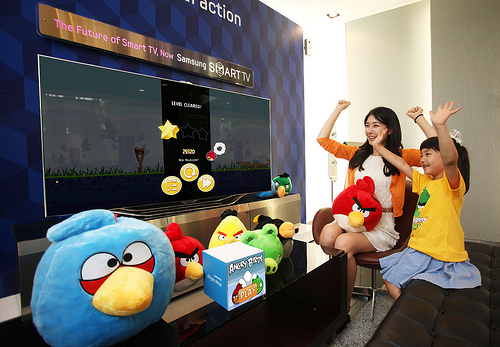
Is Angry Birds the Gateway to Gamification in the Classroom?

Many would argue that there is a clear distinction between videogames and the art of gamification since the latter specifically applies game mechanics to non-game contexts. However, with a generation brought up on videogames and the need to engage these children in the classroom, the lines are becoming ever more blurred.

Traditionally, one may think of gamification in the classroom as an instance where a game was specifically designed and implemented in order to achieve learning through the application of game mechanics. This embodies the stereotypical edu-tech games like Mavis Beacon where students are taught how to type more effectively through a series of challenges. Games like Mavis Beacon apply gamification through the use of game mechanics like rewards to incentivize completion (whether by points, badges or leveling up), leaderboards to instill competition amongst other participants, and analytics to track the progress of the player as well as overall implementation success.

Read More
julia stiglitz pamela fox coursera

Achievement and Progress in Education: The Coursera Example

Coursera is hard at work transforming post-secondary education through its innovative partnerships and use of MOOC (Massively Online Open Course) approaches. Behind their breakneck success is the desire of learners around the world to progress in their own lives and achieve something greater than themselves. In this insightful session from GSummit SF 2013, Julia Stiglitz and Pamela Fox will share Coursera’s insights about the need for progress, what drives user behavior in a lifelong learning context, and how to deliver this sense of achievement intrinsically.

Want more GSummit videos? Be sure to also subscribe to our YouTube channel to get the latest videos from GSummit SF 2013 as they’re released. You can also download a copy of this presentation by downloading it here.

Read More
mike skocko

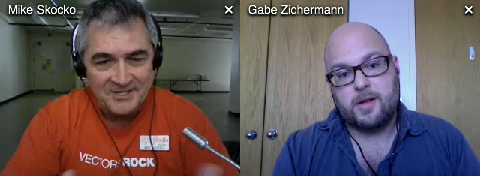
Turning Art Class into a Creative MMORPG with Mike Skocko

The Gamification Revolution is the only live gamification webcast featuring Gabe Zichermann and fellow gamification experts every week. Be sure to catch our next episode next Thursday, September 26 at 1PM ET/1800 GMT, where we will feature the best and brightest in engagement.

Remember you can participate in the show if you sign-in and RSVP! Signing in will allow you to receive show reminders, ask questions, and even join Gabe and our guest for a live question.

In this review, we feature Mike Skocko, a visual-arts educator at Valhalla High School in California. We had first heard of Mike through an esteemed recommendation from Adobe’s Tacy Trowbridge on Mike’s awesome gamification initiatives. Listen to Mike’s story below to learn about the questing system he adopted into his visual-art class to deliver curriculum in an interesting way.

This is a great conversation about a real-life teacher using effective game mechanics in the classroom. Watch Mike’s full interview below.


Download this episode (right click and save)

Read More