



The Power and Pitfalls of Status in Social Networks: Scruff’s Blue Dot

We all know motivating with SAPS and status can go a long way but what happens when it works against you?

Scruff is a fast-growing global brand in mobile dating, and the world’s second largest mobile social network distinguished by a tight-knit community, vocal users and strong brand image. With this powerful cohesion and motivated users, the introduction of status items can have unintended consequences – both positive and constructively challenging. Founding Partner and Chief Product Officer Jason Marchant shares the lessons of Scruff’s Blue Dot – an arbitrary status program that pushed the community’s buttons – and how you can leverage those insights for your community-oriented site, service or app.

Want more GSummit videos? Be sure to also subscribe to our YouTube channel to get the latest videos from GSummit SF 2013 as they’re released. You can also download a copy of this presentation by downloading it here.
Read More

Boston CIO to Gamify Citizens Connect App to Thank City Workers

If the case for non-physical rewards (see SAPS) as a motivator still hasn’t convinced you of its effectiveness, you might want to look at Boston’s government mobile app that will allow Bostonians to improve city services.

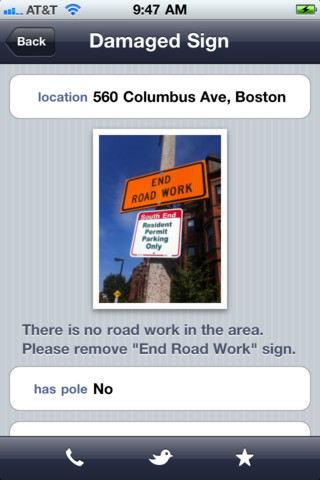
Released in 2008, Citizen’s Connect allows local citizens to report issues like broken signs and potholes to make sure they are fixed quickly. According to SearchCIO, this effort is in part of Boston CIO, Bill Oates’ desire to create an active communication loop between citizen and workers to ensure city problems are solved.

Read More

Status in the Subway: Montreal STM Introduces VIP Program

Loyalty programs have been commonly associated with airlines and retailers but Montreal’s recent plans may soon change that perspective to include public transportation systems. Montreal operates the Opus-à-l’année also know as the Opus & Cie subscriptions, a subscription service which recharges a commuter’s OPUS card automatically every month.
Montreal STM will be introducing a VIP class for its customers, which will only be made available to 20,000 commuters (9% of the 217,000 who regularly buy monthly Société passes). After subscribing for more 12 months, Opus & Cie users will be given the opportunity to upgrade to their new “maestro” status.

Read More

PSFK’s The Future of Gaming

Gamification may be buzzing, but it hasn’t quite made the mainstream yet. In conversations outside the industry, it is still common to receive puzzled looks and even a few scoffs when “games” are mentioned in the same breath as business. Despite these holdouts, the future looks bright. “The Future of Gaming” is a recent report…

Read More

Motivating Learning Beyond Grades

Education in the United States is in dark times. Although we are one of the richest nations in the world, based upon international testing, our 9th graders are 28th in math, 22nd in science, and 18th in reading. Of course standardized testing as a measurement receives its fare share of criticism, but an even more insidious culprit in America’s…

Read More

Gamification in the Globe and Mail

“How long till life is one big video game?” asks Ivor Tossell in his recent article in the Innovation section of The Globe and Mail. In the piece he gives and introductory definition of gamification and quotes Gabe Zichermann for his insights as someone “at the forefront of a new strain of marketing thinking” and…

Read More

Gamification on the Cisco Blog

In this recent post on the Cisco blog, Dannette Veale uses common examples to help illustrate what gamification really means – like Foursquare, Quest to Learn charter school, Evoke and Wii Fit.  She also quotes Gabe Zichermann and his now famous SAPS model for rewards systems. The article also mentions GSummit and how it sold…

Read More

Cash is for SAPS

One of the biggest mistakes that people make when designing engagement with gamification is to assume that cash (or stuff) is the ultimate reward. Time and time again, evidence shows that tangible rewards have serious deficits in an incentive scheme.   Limitations include: They Can Turn Users Off: If your rewards don’t look good in…

Read More