

top health

The Best of Health Gamification in 2013

In our next collection from the best gamification stories of 2013, we have a cornucopia of healthy gamified applications for everyone to check out. Gamification Co readers were most interested in seeing new health apps in 2013 and we have about 20 of the top health apps for you to check out here.

Here’s to seeing even more at 2014! (Especially with all that new stuff at CES)

Read More
playing and learning

How Gameplay Transfers Knowledge into Skills

Games are tools for rewiring your brain. When you’re playing a game what you’re essentially doing is building new neurological connections and strengthening them with a process called myelination.

You build new networks that can be used outside the game, then strengthen them through repetition. Now there’s the highly contextualized questions of what skills the game is creating and if its transferable outside that game into the real world. Not all games develop the same skills and not all skills are used in particular fields (these studies are relatively new so expect new insights in the future). Knowledge management has two terms I adopted to understand knowledge transfer from games: adaptation and exaptation, which can acts a lens to understand knowledge transfer from playing games.

Read More
nanodoc

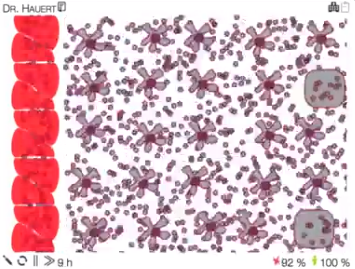
NanoDoc is MIT’s “Fold.It Solution” for Crowdsourcing Cancer Research

Given the massive success of Fold.It and it’s crowdsourced approach to tackling protein folding to fight AIDS, it’s not surprising that other researchers are adopting this model for other applications as well.

Enter NanoDoc, a scientific simulation/puzzle game that will allow bioengineers and the general public to design nanoparticle strategies to treat cancer.

If it sounds futuristic, it totally is.

Read More
dementia simulator in austrailia

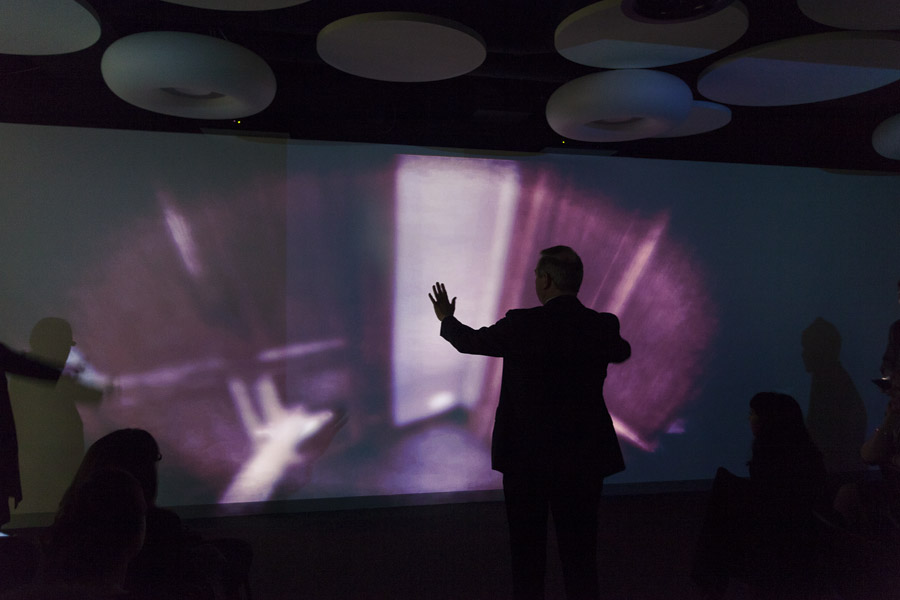
New Australian Facility is Teaching Dementia-Care By Simulating It

Alzheimer’s Australia Vic has opened up Australia’s first dementia learning center to educate people about the effects of dementia through virtual-reality simulations, according to Australian Ageing Agenda.

The simulation’s primary goal is allow students to envision the cognitive and perceptual difficulties that dementia sufferers deal with in their daily life routines.

Read More

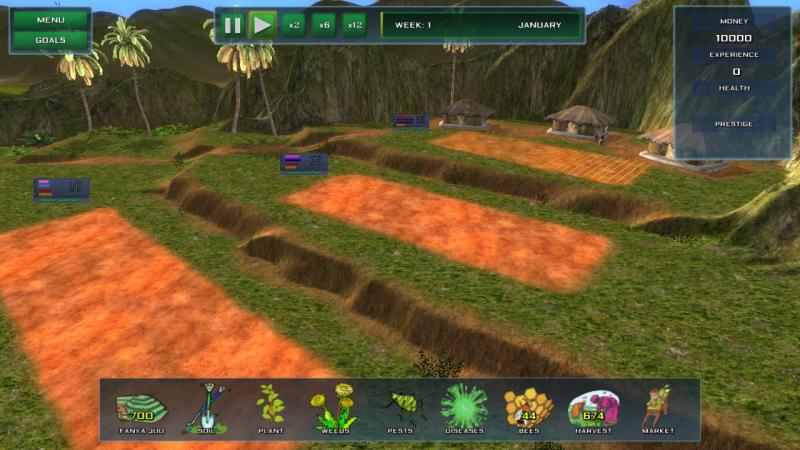
Farm Defenders is a Gates-Funded Training Game for Actual Farmers

As the worldwide agricultural market becomes increasingly commoditized, the existence of a traditional farmer is becoming more and more scarce. However, many rural villages in Africa still require the skills of a trained farmer in order to support their local economy and community. We’ve reported on one community in Kyrgyz who has used a Farmville-esque game to support local farm operations but Fast Company reports on a new game supported by the Gates Foundation that aims to support these communities through learning. Farm Defenders is a hyperrealistic simulation training game that will be used as a tool for training extension workers, which are government-contracted consultants who teach villagers scientific knowledge through farming.

Read More

How Gaming Prepares Us for Success with Failure

The Grand Theft Auto Franchise (GTA), notoriously known for promoting aggressive behavior, can also be seen as a virtual driver’s ed teacher, and possibly even a better deal; one game purchase gets you infinite lessons.

First thought that comes to mind when I hear ‘Grand Theft Auto’ is badass. Although the game typically encourages the player to break the rules, a recent Kotaku article has shown the game’s more positive side. The post explains how GTA has taught someone to drive, and I believe this is a result of two things: the ability to fail without fear and the depth of game design.

Read More

SimCity as a Game to Inspire Young Engineers and City Planners

SimCity is an urban-planning game that is now being used for education in the form of SimCity EDU. The game can teach anything from economics, urban planning, and even environmental studies. The goal with SimCity EDU is to make the game a common part of the classroom experience; students can learn a wide variety of subjects, while working work together, and teachers can create detailed curricula that adhere to learning standards. However, that isn’t to say that the standard SimCity game couldn’t be just as educational as the version designed for classrooms. 

Because of the realistic nature of the game as an urban city simulator, one clever gamer by the name of Mike Rose, has been experimenting with using SimCity as a tool to address problems in cities. 

Read More