



Alex Landa

Just a college student that plays too many games.

The Goldman Sachs NYC Scavenger Hunt for Charity

With the simple rules “do not tamper with the clues” and “no private motorized transport”, 20 Goldman Sachs employee teams armed with bubble gum cards, a seating chart for Kevin Bacon’s wedding, a plastic cube, and a three-stanza poem all competed to win the scavenger hunt Midnight Madness.

Originally founded in 1996 by Mat Laibowitz and his Columbia University friend Dan Michaelson, these teams of NYC based financiers and some of their friends took to the streets to decipher clues to win the hunt – all for charity. For almost two days, these contestants live in their own reality solving puzzles that would make even Sherlock Holmes or the most hardened gamer cringe.
Read More

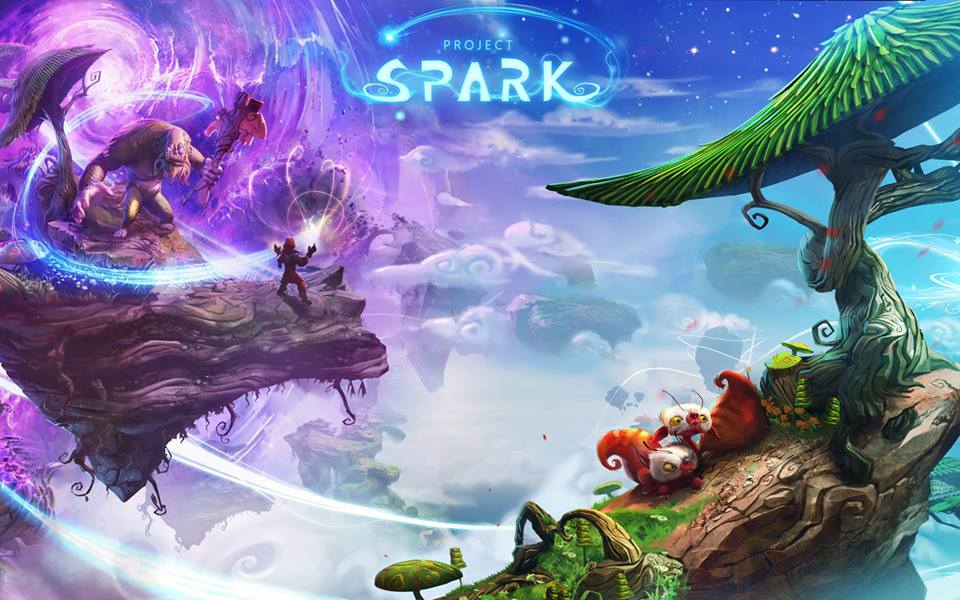
Project Spark Allows Players to Create Any World They Want

The Electronic Entertainment Expo (E3 for short) is an annual event where developers showcase their latest electronic and gaming projects. Each year this event announces new video game consoles, games, and other media that are deserving of the big stage. Among this year’s presentation of the next round of console wars, shooters, sport games and RPGs, there was one announcement that stood out in the crowd as innovate to say the least: Project Spark.

Project Spark (PS) was a big part of Microsoft’s press conference at E3. The main concept behind PS is that players create their own worlds filled with characters, story, an evolving environment, or anything else they want.

Read More

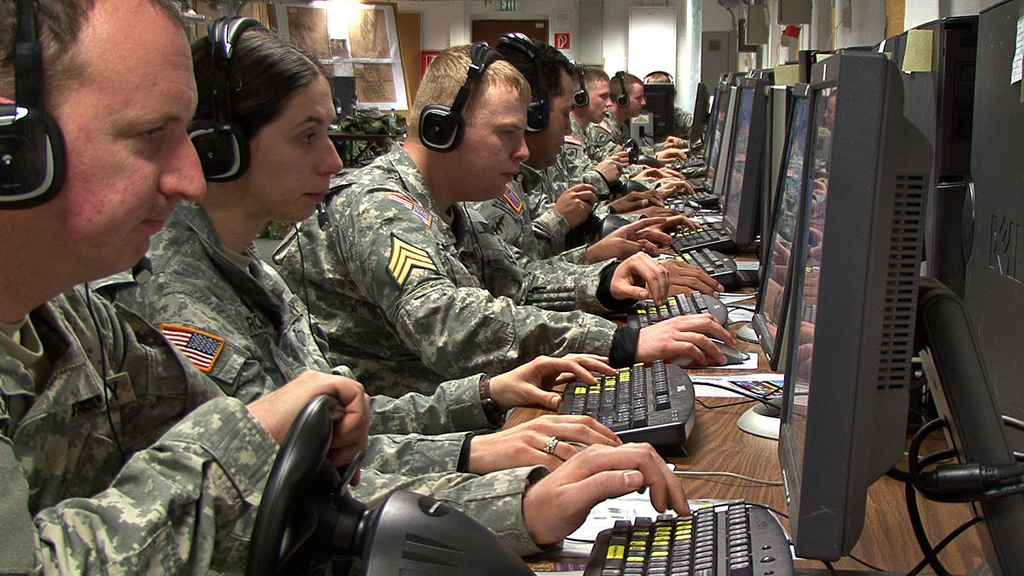
Turning Cyberwarfare into a Touch-Screen Game with Plan X

To quote the game series Fallout: “War. War never changes.” This may or may not be true to some people, but the Pentagon is at least trying to change cyberwarfare with Plan X.

Plan X is the Pentagon’s brainchild with made by the creators of some Apple products with assistance from the illustrators of the Transformers movies. The goal is to make cyberwarfare easy with a few finger swipes – a mechanism seen in many current casual games.

DARPA (Defense Advanced Research Projects Agency) is looking to take all the uncertainty and difficulty out of cyberwarfare. Currently there is too much planning, too many variables, and not enough control. The government wants cyberwarfare to be as simple and predictable as more classical means of war.

Read More

The 10th Annual Games for Change Festival Launches in NYC from June 17 – 19

Do you like gaming? Do you enjoy new and innovative ideas that can better our world? Of course you do! It’s time to check out the 10th Anniversary Games for Change Festival at New World Stages in New York City June 17th – 19th.

The event is created and hosted by Games for Change (G4C) with the mission to promote social change through gaming. This international conference unites gaming professionals of different backgrounds from around the world ranging from commercial gaming to academia with the shared goal of bettering tomorrow. “The story of the Games for Change Festival is the story of how digital games have evolved, growing from an audience of 40 in 2004 to more than 10,000 attendees on-site and online,” said Michelle Byrd and Asi Burak, Co-Presidents of Games for Change. This year’s event aims to be the biggest and best one yet.

Read More

Soccket: The Soccer Ball That Generates Electricity

If you’re able to read this, then you have ample electricity for everyday means. However, there are places in the world that have little-to-no available electricity for simple purposes like lightning their homes at night. Some folks have made a soccer ball that’s able to produce electricity by simply being kicked around in order to provide assistance to those who need it.

Over at Uncharted Play, the creators have invented an energy generating soccer ball called Soccket. The ball produces electricity from the kinetic energy made when kicked around and it only takes 30-minutes of play to power an LED light for 3 hours

Read More

The Oculus Rift’s Potential in Virtual Reality and Gamification

For decades, science-fiction films, television shows, and literature have all featured the concept of virtual reality. Virtual reality (VR) has been a topic of modern lore and a goal unattainable in our lifetimes. Now in 2013, the technological dream of VR will soon be a reality with the Oculus Rift.

Following a successful KickStarter campaign, the Oculus Rift (OR) virtual reality headset has been making waves on tech sites around the world. It goes without saying that for video games, this means a leap into the future and a sense of immersion yet to be seen.

Read More

McGill University Doctors Used Tetris to Treat Lazy Eye

It’s funny – I’ve always thought that Tetris is the reason for some gamers having OCD and great organizational skills. Turns out that Tetris can fix lazy eye.

To go along with a trend in using video games to improve the health of players as seen in aiding senior citizen health and increasing multitasking abilities, doctors are now using Tetris to treat patients with lazy eyes. Featured in Current Biology, a team at McGill University found that Tetris worked better than the usual method of patching the good eye to force the weak eye to work on its own.

Read More

What Attendees are Saying About GSummit 2013: Day 1

A Focus on Our Favorite Tweets from GSummit 2013. GSummit 2013 is fast underway and attendees aren’t wasting any time tweeting about their experience here. Everyone attending is actively participating and giving feedback by posting real-time reactions to Twitter during talks, events, and even the awesome lunch trucks. Between Mario Herger’s Enterprise Gamification Certification Workshop…

Read More

Why Gamification is Important as a Gamer

As a lifelong gamer I’ve always considered video game mechanics to be in a league of their own. I find gaming to create a sense of interaction and engagement not found in other media. Whether it’s an experience point system such as seen in a role-playing game (RPG) or an acquired ability to problem solve from a puzzle game, there’s something special about gaming that appeals to our emotions to make us invested in a story or idea.

Read More

University Game Labs Emerging to Enhance Community Learning

To think, there are still people who say gaming isn’t good for education; try saying that to universities with game labs.

Gamification is a powerful tool that can make the educational experience not only more fun, but more effective as well. Because of the increasing number of successful game labs, more universities are looking to tap into the power of games to reap the rewards from social and interactive learning.

Read More

Mobile Game Get Water Teaches About Water Scarcity with Good Gameplay and Narrative

There are games that try to create a message while still attempting to remain enjoyable. Many times either the message becomes blurred or the game simply isn’t fun. Get Water manages to hit both marks properly.

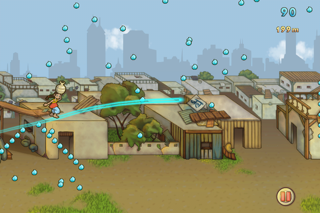
Get Water by Decode Global is a simple screen-swiping endless running game about a young girl named Maya who is dragged out of class to obtain water while fending off various animals in her way. Many swiping games such as this have little-to-no story or purpose — they’re just casual games to play when waiting at the doctor or in between classes. Get Water has strong messages about water scarcity, gender inequality, and educational problems that plague other countries.

Read More

SimCity as a Game to Inspire Young Engineers and City Planners

SimCity is an urban-planning game that is now being used for education in the form of SimCity EDU. The game can teach anything from economics, urban planning, and even environmental studies. The goal with SimCity EDU is to make the game a common part of the classroom experience; students can learn a wide variety of subjects, while working work together, and teachers can create detailed curricula that adhere to learning standards. However, that isn’t to say that the standard SimCity game couldn’t be just as educational as the version designed for classrooms. 

Because of the realistic nature of the game as an urban city simulator, one clever gamer by the name of Mike Rose, has been experimenting with using SimCity as a tool to address problems in cities. 

Read More

Fooya, the Crowdfunded Game from India to Teach Healthy Eating

Food fights in the cafeteria are usually not well-liked by adults. Virtual food fights that promote education about food, health, and wellness is a totally different story.

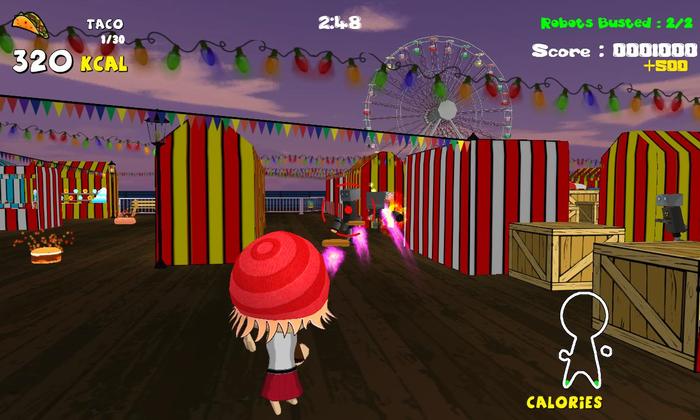
Fooya is a third-person, single-player food fight game meant to replicate the childhood activity. FriendsLearn recently used KickStarter to raise money to expand the game with a multiplayer expansion of the current single-player version which will be titled Fooya with Friends.

Read More