



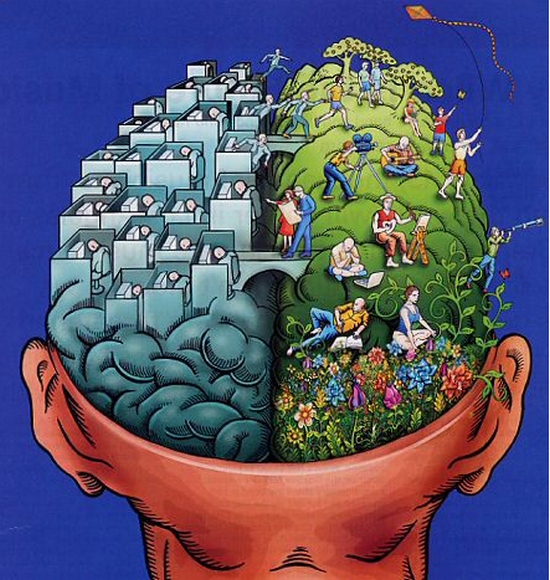
Study: Playing Video Games Can Increase Brain Size

A study published in PLOS ONE, an online peer-reviewed journal, gives quantitative evidence of what effects video gaming has from a physical, biological perspective. At very least, playing video games can alter your brain.

Studying a mix of 152 teenagers, both boys and girls, testing was done on two areas of the brain: the left dorsolateral prefrontal cortex (DLPFC) and the left frontal eye fields (FEF). What the researchers discovered was that these areas, responsible for executive control, strategic planning, and eye movement relative to “visio-spatial attention” were all positively influenced by video game play in a significant way.


Read More

The Winner Effect: How Success Affects Brain Chemistry

There’s a very interesting phenomena in biology I’ve been wanting to link to gamification called “the winner effect.” When any animal, from fish to humans, wins a contest, they have a large release of testosterone and dopamine in the brain. Over time this changes their brains structure and chemical makeup, making them more confident, smarter, and able to take on larger challenges than before.

Read More

The Road Show Puzzle Game Improves Coginition Speed For Seniors

Games always don’t need the flashy graphics paired with capturing audio to make it engaging. Clear objectives and a desire to compete against the self is another effective method for improving skills through a game. According to Mashable, Researchers at the University of Iowa have shown this through their recent success through Road Show, a visual puzzle game aimed at improving senior citizen cognition.

Read More

The Engagement Alliance

Gamification Experts are using today’s New York City Gamification Summit to announce the formation of the first industry association called The Engagement Alliance. This not-for-profit organization has set its sights on the study of the science behind the power of game mechanics to create behavior change.

Read More