



Ed Note: We’re initiating coverage today on the Gamification of Health, the most requested topic among our readers and a subject of extraordinary importance to us at Gamification.Co. Feel free to send us your article suggestions. – Gabe Zichermann
Full-service gyms are currently going through hard times in the US. According to a recent New York Times article, 45% of gym members quit during any given year and the 15% of Americans who currently belong to a gym is rapidly decreasing. The conclusion of the article is unmistakable: the industry has a problem with user engagement. There were a lot of attendees at January’s GSummit from companies eager to engage consumers around health and wellness – perhaps shifting gym management’s mindset from consumers to players (as we recommend in our Strategic Gamification Blueprint).
As fitness consultant Casey Conrad told Catherine Saint Louis of the New York Times, “There’s no question that the social element is a huge, huge piece to getting participation.” But this idea has taken a major hit of late. As any gym member can attest, a set of white iPod earphones is pretty much required equipment, making each user the central focus in a lonely iTunes commercial. Flat screen TVs have also served to separate users from what was once the biggest draw for gyms: community.
Other gyms, health clubs, yoga and martial arts facilities still stress the importance of community to encourage engagement. If you miss a session, others ask “where have you been?,” while still others may notice you’re doing well and cheer you on. While facilities like these outperform the median, they continue to depend on the serendipity of user interaction to drive their success. That is, community is spontaneous, mysterious and unstructured. But not everyone is content to leave results to chance.
Yifan Zhang and Geoff Oberhofer believe they will keep people going to full-service facilities with Gym-Pact. Their business adapts a model, first covered in the book Free by Chris Anderson, that describes selling memberships at drastically reduced prices and only charging users if they miss a session. The full month’s cost is then charged as a “motivational fee”. This tactic is essentially flawed, as getting overcharged for unused services is already a common complaint of gym-goers. By encouraging users through negative reinforcement, it associates even more negative emotions with the act of getting on a treadmill and does nothing to increase engagement.

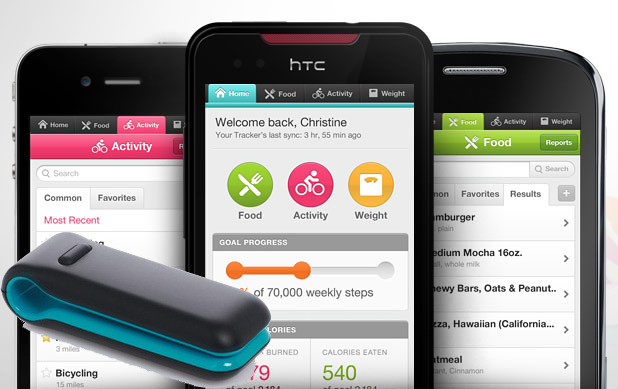
On the other hand, many players are abandoning the now-solitary experience of brick and mortar gyms and joining communities of mostly solo exercise with social/online connection. Players are purchasing programs and devices that motivate them to stay fit in a more gamified, online way such as the FitBit, Nike+, the WiiFit, and even Nintendo 3DS . The power of this type of positive motivation has been demonstrated in the developing field of positive psychology.
Others, such as Julie Price, previously Vice-President of Digital Products at Club One and Judy Shasek, Cofounder of Healthy Community Development are investigating ways to use games in order to get people to jump on treadmills or just simply get out and run. Julie is concentrating on how to eliminate the de-motivational aspects of working out. She describes her research:
“I was looking specifically at making fitness fun; so games and how you could create a gym made up of just games, where people would go and exercise… In a lot of the research they are finding that people’s rate of perceived exertion is low [in fitness games], but their heart rate is actually a lot higher [than] if they are doing other exercise, so they are getting a huge benefit, but they are not seeing it as work.”
By making the gym a more engaging experience, Julie is hoping help players by lowering the threshold and get over the inertia to begin exercising and then enjoy it once they have begun.
Full-service gyms, even in their heyday, only drew those users that were motivated to get into shape to begin with. Pioneers like Shasek are re-imagining the experience of fitness, bringing together entire communities through games in order to motivate players to exercise. By casting a wider net and encouraging existing communities to get involved, it helps those individuals who would have otherwise fallen through the cracks.