The NY Times Features Gamification And Employee Fitness

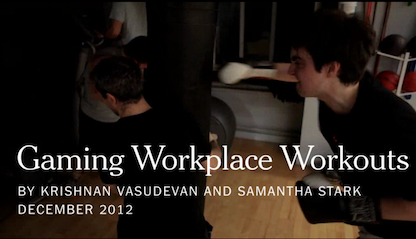
On Christmas Eve The New York Times –  the paper of record – acknowledged the influence of gamification with an article which features delightful game mechanics in its online version, while the print version of the article appeared on the cover, page A1. Technology writer Nick Wingfield offered readers a basic introduction to the gamification movement with some case studies and a little bit of cotroversy as well. Online readers earned badges for reading the article, searching through it, for reading the comments and more.

Read More

Add Some Gamification to Your Drunken Holiday Office Parties

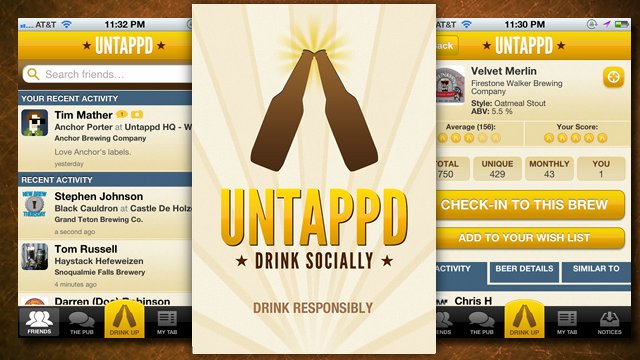
It’s finally 12/21/12 and the world is supposed to end at any moment now. It also just so happens to be right at the cusp of Christmas and other major holidays. Whether you’re cowering in fear or celebrating the holidays like a sane person, chances are that you’re probably drinking a lot of alcohol for the occasion. Here are some gamification apps to make drinking even more engaging during your holiday boozing.

Read More

Encouraging Gen-Y Entrepreneurship with the Gamification Market

According to many economists, encouraging the growth of small businesses and entrepreneurship is one of the best ways to help the country recover from the financial setbacks of the past few years. An entrepreneurial spirit does not come easily to everyone, though. It takes a certain type of personality to strike out independently, but there are also a range of business skills needed to find success. Schools, universities, and graduate management programs are taking note, and slowly but surely are introducing small business training modules to their curricula. Motivating kids to think about jumping aboard the small business wagon is, many believe, a smart move, both for the economy and the future development of our leaders. Particularly as technology continues to develop and become ubiquitous, there are likely to be an ever-increasing supply of entrepreneurial opportunities for those who are willing—and prepared—to take on the challenge.

Read More

North Korea’s Crap Attempt at Gamified Propaganda: Pyongyang Racers

A Chinese company called Koryo Tours has been commissioned (or forced…who knows) to create a game simulating a driving tour around Pyongyang called Pyongyang Racers. You’re placed in a nondescript car and need to drive around this ghost-town of a city to collect oil barrels and stamps to see monuments in Pyongyang. After taking about  45 minutes to finish this crude game, I’ve come to the conclusion that Pyongyang Racers is one of the worst gamified marketing efforts I’ve ever seen.

Read More

The Evolution of Loyalty with Rajat Paharia

Each week on the Gamification Revolution web show, Gabe Zichermann answers all your burning gamification questions LIVE every Monday at 1pm ET/10am PT/1800 GMT at http://gamification.co/live. This week’s show features Rajat Paharia, Founder and Chief Product Officer of gamification platform, Bunchball. Here’s a rundown on some of the topics they spoke about:

  • What should people focus on first when starting to integrate gamification?
  • Why people fear personalized marketing and loyalty.
  • Rajat explains the “unfair value exchange” consumers are believed to have in gamification systems
  • Some examples of “negative” enterprise gamification
  • The current state of gamification in learning management systems


Download this episode (right click and save)

This will be our last episode of 2012 – so stay tuned for our return on January 11, 1:30 PM with Asi Burak, the Co-President of Games for Change.

Read More

Gamification Myths Part 2: Game Mechanics are Being Misused

One of the more vexing questions within game design is “what is a game mechanic” and its corollary — what isn’t. Along with some of the other major disagreements in game design, the mechanics question is both existential and crucial for understanding the interplay between games and gamification. Very long and interesting articles, papers, speeches and presentations (n.b. there are obviously thousands more) have been given on the topic of what is a game mechanic, how it works, what conflicts are, etc – most of them interesting, if academic.

Read More

Are You Elfing Kidding Me?! Elfster Gamifies Secret Santa

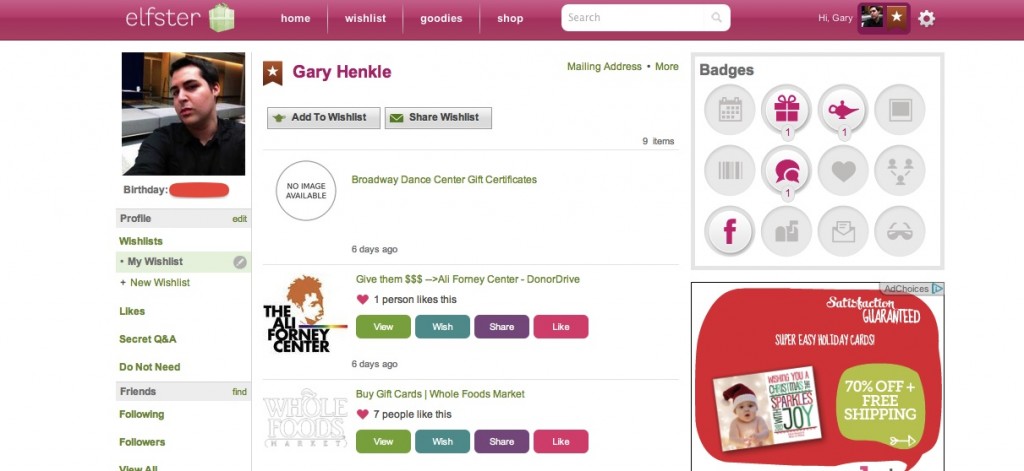
I am very excited for this coming Thursday, when our office will be exchanging gifts for Secret Santa! Here at Gamification Co. we couldn’t just have our staff draw names out of a hat – that would be too fourth grade – so our editor Ivan set us up with a free online Secret Santa exchange called Elfster a social network which organizes Secret Santa lists for your employees.

Read More

Zurmo Delivers CRM Gamification with Version 1.0

The release is the culmination of two years of full-time software development by seasoned engineers in the Open Source CRM field determined to build the best Open Source CRM application on the planet. Developers of the Zurmo Open Source Customer Relationship Management application today announced the General Audience (GA) release of Zurmo Version 1.0. The release is the culmination of two years of full-time software development by seasoned engineers in the Open Source CRM field. Zurmo 1.0 addresses three significant pillars to a successful customer facing solution – Users, Developers, and the Enterprise.

Read More

Challenging Games for Change’s Designers and Gabe’s Gamification History

I see some issues that require immediate attention with the Games for Change world. Principally a rapidly emerging gap between the promise and the track record of socially-oriented gamified interventions. Why, with all the good intentions, is success so fleeting? And what can the high-minded practitioners in the industry do about making it better?

Read More

Gamify Your Morning Snooze with Wake N Shake

Do you play endless mind games as you hit snooze on the alarm clock each morning? My rule of thumb is to never snooze more than three-times before a certain hour in the morning in order to give myself a “mission” to accomplish. However, a newly redesigned alarm app called Wake N Shake actually turns that morning snooze-fest into a gamified and social experience.

Wake N Shake was originally designed to be a “merciless” alarm application that forced you to shake your phone like a madman before it shuts off. Its new version now includes daily leaderboards and achievements to make the experience of daily phone shaking a little more interesting.

Read More

Playing Video Games Related to Stronger Surgery Skills

I’ll never forget the moment when my friend’s father stated he bought a Wii because he had read some studies about how playing games improved hand-eye coordination related to surgery as he waggled a controller at the television screen. While not all Wii-actions might assist in laparoscopic surgery, a recent study by researchers at the University of Texas Medical Branch at Galveston (UTMBG) demonstrated playing video games was positively correlated with the ability to perform minimally-invasive surgery techniques.

Read More

Gamification Myths: The Difference Between Game Design and Gamification

One of the biggest ideological debates in the games industry today is about the role, meaning, value and place of gamification. There has been almost every kind of discussion, from polite to threatening, political to academic and expert to amateur. And while the arguments and syntax vary, they seem to always end up in a place familiar to contemporary American culture: the religious ideological war. In fact, what we’re witnessing is more of a schism than an outright battle, and my sense is that both disciplines will ultimately be better for it.

In order to contextualize the discussion, I want to lay out the Top Four biggest mistakes, myths and misunderstandings that game designers have about gamification, and how they can improve their comprehension. At the same time, I want to help explain how gamification designers can benefit from accepting criticism through a meaningful filter that can be useful to advance the art and science of engagement.

Read More