Gabe Zichermann

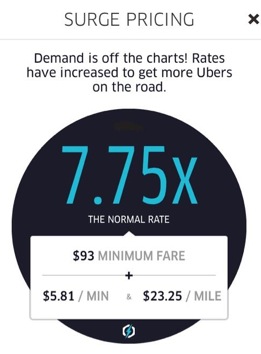
gettaxi gamification

How GetTaxi Is Empowering Drivers with Gamification

No matter where you travel in the world, one thing is consistent: taxis suck. They frequently don’t know where they’re going, they try to rip you off, driver’s often have trouble communicating, and credit card acceptance is more rare than a unicorn. Against this context, a number of startups have made great inroads in transforming livery transport. Uber and Lyft are probably the most famous – though their approach has been to replace taxis entirely rather than work with existing systems. GetTaxi, however, aims to empower their drivers in a way not seen before.

Read More
calm

Calm: A Meditation App That Does Feedback Right

One of the most elemental concepts in good gamification design is what I call the three Fs: Feedback, Friends and Fun. They come in many forms, but together they form the foundational structure of how we create engagement. I’ve written and spoken about the three Fs at length, but I find myself spending a lot of time thinking about and designing effective feedback systems.  I also love to meditate.

At the intersection of both of these interests is the excellent and visually gorgeous app, Calm. It’s a guided meditation app for iOS that’s received a number of accolades for its simple design and great programming. The premise of guided meditations it that an instructor’s voice (and soothing music) help you relax, focus and create productive, healing brain states.

Read More
levelup

Startup Gamification: What’s in an MVP?

The one question I get asked over and over again by startups is: at what point should I include gamification? My answer has evolved significantly over the past four years.

Every year, I teach hundreds of people how to use gamification to raise their customer and employee engagement through my live, hands-on workshop series. Hundreds more also earn their design certification through the Engagement Alliance’s online course program. In the years since I’ve been teaching gamified design, I’ve found that about 30% of my students are startup founders, product managers and UX designers trying to figure out how to apply powerful game mechanics to their breakthrough ideas. I also co-direct the Founder Institute startup accelerator in NYC where 80 aspiring entrepreneurs work with me on getting launched and gamifying each year.

What I’ve learned from all these interactions is that there isn’t a cookie cutter solution that would work for every new project. However, there is a pattern of best practice that has emerged that – when combined with a good gamification design education – can produce superior results. I’ve taken to calling it the 3Ps: Progress, Points, and Prompts.

Read More

In Defense of Trophies: The Case for Rewarding Every Step

This week, Ashley Merryman (co-author with Po Bronson of two books on motivation) wrote a startlingly misguided op-ed in the New York Times entitled Losing is Good For You. The title suggests that the author was going to dive into the teaching power of failure (which is amazing). Instead, it’s a thinly supported screed against “rewarding kids for just showing up,” and judging from the comments it’s touched the Lazy Millennial nerve as well. While the authors deserve creative credit for creating a new middle class bogeyman in the form of the “Trophy-Industrial Complex”, the rest of the article is full of intellectual leaps that might leave parents and educators with the wrong impression.

Read More
gamification certification

The Guide to Our New Gamification Certification Levels of Mastery

The first gamification design course was offered in 2011 at the inaugural GSummit in SF. Since then, nearly 1000 people have taken live and online courses that are eligible for certification through the Engagement Alliance. Additionally, tens of thousands have attended on-and-offline gamification courses that don’t offer any commonly accepted accreditation.

After many years of experimenting with design frameworks and through extensive discussion and consultation with industry, I’m pleased to announce a new rubric for design certification. This new program is based on best practices, designed to maximize the value of your education and help you deliver optimal results for your employer and your career. Here are the new levels of certification, and what they mean:

Read More

Join the Global Gamification Tour with GSummit Global

gsummit global 2013

GSummit Global to Arrive This Fall At:

NYC, Chicago, San Francisco, Toronto, London, Tel Aviv, Dubai, Singapore, Tokyo, Seoul, and Sydney 

As the gamification movement continues to grow, we’ve been looking for better ways to connect the global community.  Our big conference – GSummit – attracts a good number of global attendees to SF in June, but not everyone can afford to come to San Francisco. Also, we wanted to find a way to help the local community form while providing training and certification opportunities. So we’re trying something entirely new: GSummit Global – a virtual event series that brings together the best of live and virtual events into one affordable, accessible package. I’ll be traveling around the world this winter – and I’d like you to join me

Read More

Get Certified in Gamification Design Online

I’ve been hard at work on a bunch of cool projects, and I wanted you to be among the first to know about my latest: you can now earn your first two levels of gamification certification online, at your own pace.

In partnership with Udemy, I’ve developed an all-new curriculum that teaches you the basics of gamification and engagement design in two parts:

1. Fundamentals of Gamification (LEVEL 1, BASIC)
2. Design Principles, Mechanics, Mastery & More (LEVEL 2, EXPERT)

Click on the two links above to check them out, watch a free lecture, and automatically take advantage of special, limited-time pricing for Gamification Co friends and partners.

Read More
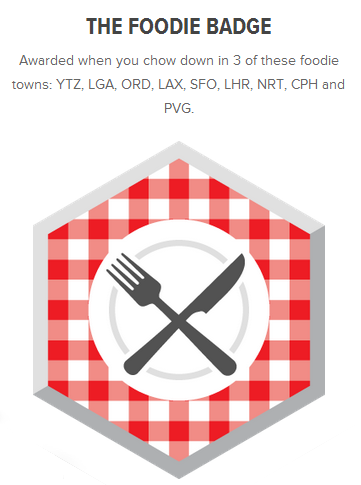
earn your wings foodie badge

Earn Your Wings: Air Canada’s Successful Gamification Venture into Loyalty

There’s little question that the loyalty “industry” has an innovation problem. With few exceptions, the world’s largest loyalty programs (mostly in travel, finance and retail) are mostly the same as they were 20 years ago. Social, mobile, gamification have struggled to find a footing, even as they are the entire foundation of next-gen loyalty systems such as those developed by Square, Belly or any number of gamified providers. With so much inertia and torpor, it’s easy to give up on traditional loyalty providers when it comes to innovation…but perhaps the old dog has a few tricks left.

A few weeks ago, through a social sharing post by a friend (this data point will be crucial), I came upon a new promotion run by Air Canada, called Earn Your Wings. The program created a leaderboard of top flyers during the promotional period that were ranked based on a range of activities. These included, but weren’t limited to, miles flown and were supported by a series of badges awarded for different activity loops. Top players split a large pot of 10 million miles at the end of the promotion period, and that activity seemed especially fierce, which is what really excited me.

Read More

Mandatory Fun: New Gamification Research from Wharton

One of the questions I’m asked most frequently is: “What are the biggest mistakes/risks/pitfalls of Gamification?” My answer almost always includes a cautionary note about the risks of compelling people to “play” gamified experiences, because using force reduces a sense of agency. This is a trap many companies fall into when they gamify an employee process. No matter how much money they spend building an amazing, engaging system, many HR folks fail to consider how they’ll get users to participate beyond “they have to”, or “this is the new process.”

New gamification research out this week from UPenn’s Wharton Business School puts a spotlight on this thorny question, looking at the efficacy of sales team gamification when it’s optional vs compulsory through a primary research project at a high-growth tech startup. The results indicate that gamification is effective at improving employee satisfaction, but if its compulsory it may actually reduce their overall affect.

Read More

A Leaderboard Always Pays Its Debts: Foursquare’s Game of Cones

I’m a recent convert to HBO’s hit series, Game of Thrones – and binge watching in catch-up mode is a favorite activity in my home on lazy Sundays. Inasmuch as I’m just getting to know the complex, fantastic miniseries, I’m no ice cream or gamification neophyte. So it was with some excitement that I followed Foursquare’s newest promotional tie-in, The Game of Cones.

Read More

One Million Views for Gamification

Since the first GSummit in January of 2011 in San Francisco, we have been sharing presentation materials with the community and world on Slideshare. Today we’re pleased to announce that those slides have been viewed over 1,000,000 times – a milestone we never could have imagined these 3 short years ago. With amazing content from…

Read More

7 Reasons Why Apple’s Enterprise Bread and Circuses Fail in iOS 7

Yesterday Apple revealed iOS 7, the latest version of its operating system for mobile devices. The update was greeted – as usual – by thunderous applause from the company’s legions of fanboys and with vocal derision from pro-Android bigots. In the midst of all the hoopla and traded social media barbs, one thing seems glaringly obvious: Apple is out of ideas, particularly for business users.

Read More

How Not to Make a Point (and Earn that Badge)

Yesterday, Steve Bocska opined here on Gamification.co about what was to be – ostensibly – a discussion of designing gamification without using poins and badges. Instead, what he wrote was a screed that questioned the ethics of many gamifiers, assailed social games (really? is this 2011 again?) and reached its climax with the oh-so-powerful suggestion that you “think very carefully about what you’re trying to accomplish.” In the process of trying to lecture this growing community on its ills, I think Steve has made the point of one of our most prolific experts, Rajat Paharia, very clear: game designers – in general – just don’t understand gamification.

Read More