


Games for Change 2014 Grows In Popularity

It all started in June 2004. This was the very first Games for Change Festival ever, it was held at New York Academy of Sciences in New York City. The goal? To investigate whether or not games could become serious games, ones that could be used for educational purposes and to inspire social change. Unfortunately only forty-two people attended…

However, this year’s Games for Change Festival will prove just how strong this movement has become. It has been projected that more than 800 people have attended in-person and an additional 10,000 people will have attended the event through streaming this past week. The festival also nabbed a great ally in their quest for social good by partnering with the Tribeca Film Festival for this year’s event.

Read More

Study: Playing Video Games Can Increase Brain Size

A study published in PLOS ONE, an online peer-reviewed journal, gives quantitative evidence of what effects video gaming has from a physical, biological perspective. At very least, playing video games can alter your brain.

Studying a mix of 152 teenagers, both boys and girls, testing was done on two areas of the brain: the left dorsolateral prefrontal cortex (DLPFC) and the left frontal eye fields (FEF). What the researchers discovered was that these areas, responsible for executive control, strategic planning, and eye movement relative to “visio-spatial attention” were all positively influenced by video game play in a significant way.

Read More

Spotlight Gamification Expert: Kevin Werbach

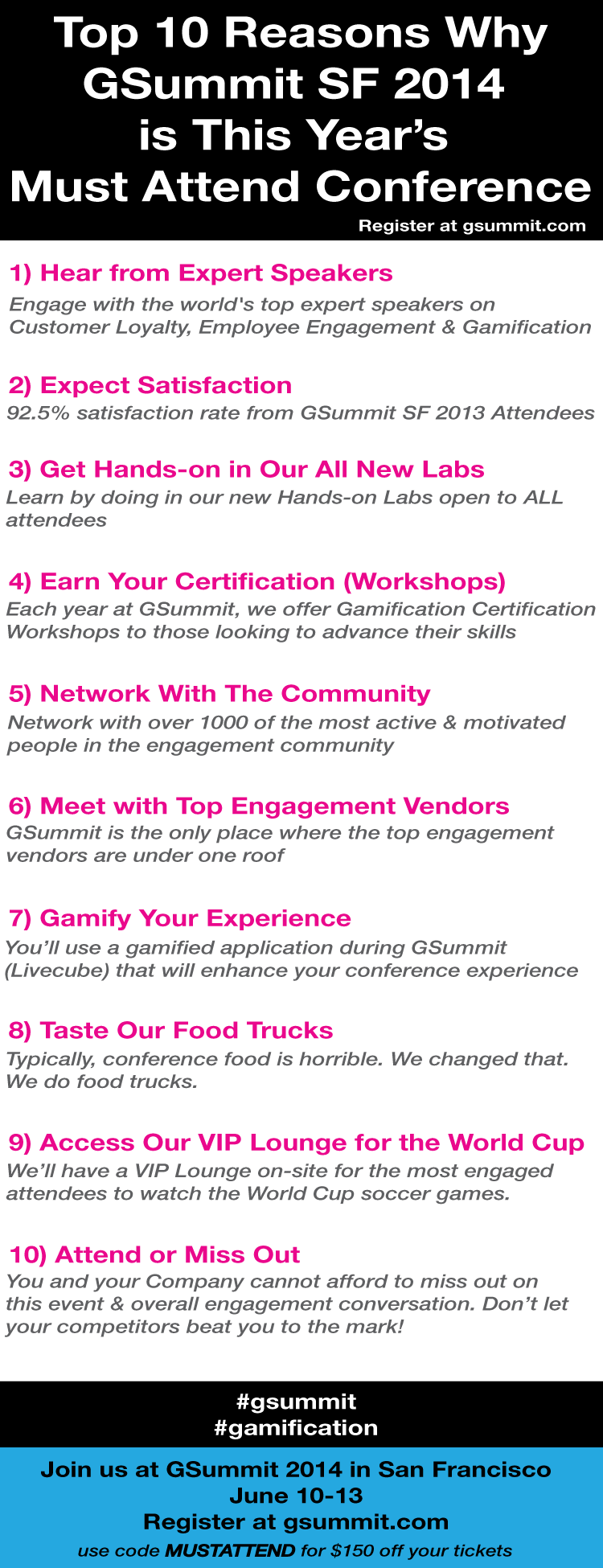
As we move into our next installment of GSummit (June 10-13 in San Francisco), we look at our past GSummit speakers and experts that have helped shape the user engagement space. This week’s spotlight Gamification Expert is Kevin Werbach–Associate Professor at The Wharton School at UPenn and teacher in the massively successful online Gamification Class on…

Read More

New for GSummit SF 2014: Hands-on Labs for ALL Conference Attendees

With the consistently sold-out success of our Certification Workshops at GSummit each year, we decided to add a workshop experience to the regular conference agenda FOR ALL ATTENDEES to participate it. We call them Hands-on Labs and they’re going to be one of the best aspects of this year’s event–guaranteed! Each of the 90-minute Labs will offer a limited group…

Read More
wellness

Case Study: Vitality Squares – A Wellness Game of Chance

Vitality is an international, comprehensive and personalized wellness program, which from its origins in the 1990s incorporated basic gaming elements of points, status and awards. As we evolve we continue to ask ourselves: What mechanisms encourage our members to participate and get healthier? And moreover, how do we sustain and increase engagement over time?

To that end, we introduced Vitality Squares early in 2013, as an online health-themed game of chance that can be played by members once a month to earn points.

Read More
top health

The Best of Health Gamification in 2013

In our next collection from the best gamification stories of 2013, we have a cornucopia of healthy gamified applications for everyone to check out. Gamification Co readers were most interested in seeing new health apps in 2013 and we have about 20 of the top health apps for you to check out here.

Here’s to seeing even more at 2014! (Especially with all that new stuff at CES)

Read More
nanodoc

NanoDoc is MIT’s “Fold.It Solution” for Crowdsourcing Cancer Research

Given the massive success of Fold.It and it’s crowdsourced approach to tackling protein folding to fight AIDS, it’s not surprising that other researchers are adopting this model for other applications as well.

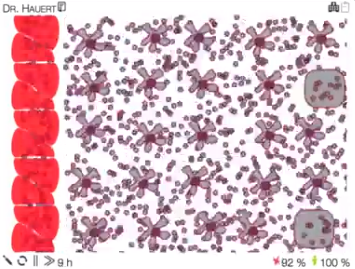
Enter NanoDoc, a scientific simulation/puzzle game that will allow bioengineers and the general public to design nanoparticle strategies to treat cancer.

If it sounds futuristic, it totally is.

Read More
squat game

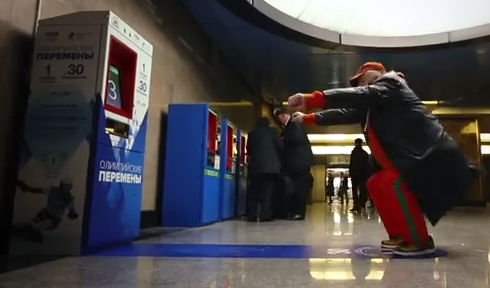
Would You Squat 30 Times For a Free Metro Pass?

The XXII Olympic Winter Games in Sochi approaching fast and organizers are turning to gamified solutions to bring exercise into the daily lives of busy Moscovians.

Much like this 2011 French Contrex commercial fueled a striptease show on an outdoor wall by the energy generated by female bystanders, Russian creative agency MOST Creative Club turned a typical subway ticket machine in Moscow’s Vystavochnaya station into an Olympic one — by offering travelers a free pass in exchange for 30 squats

Read More