Challenging Games for Change’s Designers and Gabe’s Gamification History

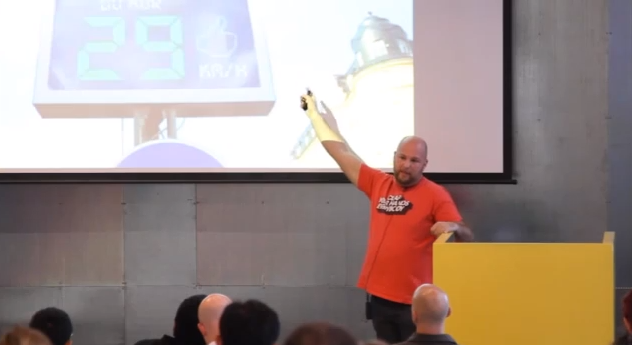
I see some issues that require immediate attention with the Games for Change world. Principally a rapidly emerging gap between the promise and the track record of socially-oriented gamified interventions. Why, with all the good intentions, is success so fleeting? And what can the high-minded practitioners in the industry do about making it better?

Read More

Gamify Your Morning Snooze with Wake N Shake

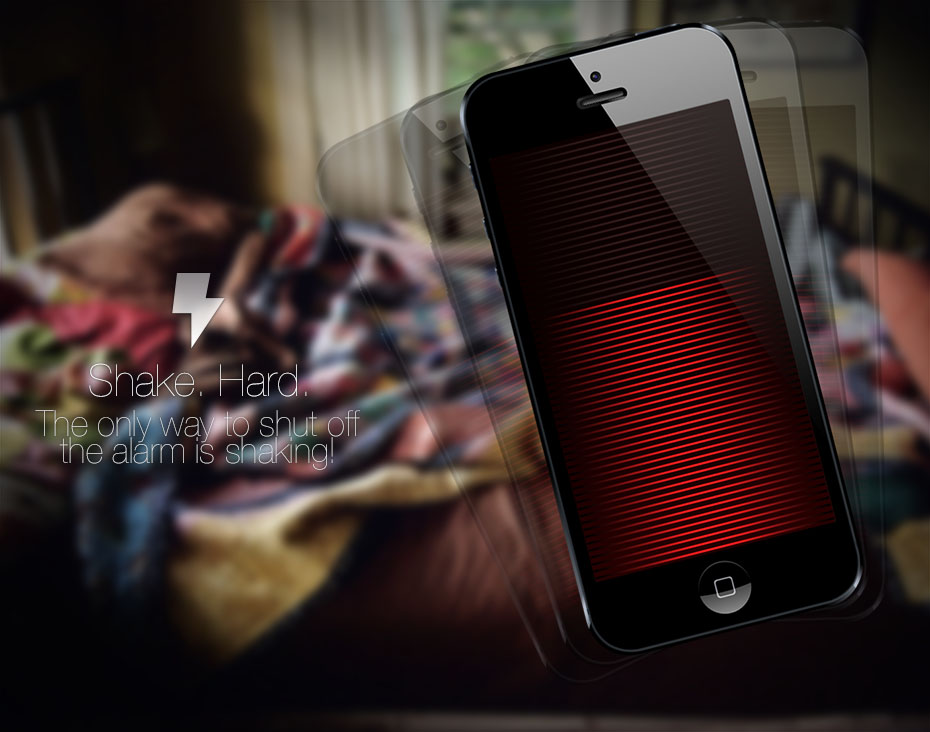
Do you play endless mind games as you hit snooze on the alarm clock each morning? My rule of thumb is to never snooze more than three-times before a certain hour in the morning in order to give myself a “mission” to accomplish. However, a newly redesigned alarm app called Wake N Shake actually turns that morning snooze-fest into a gamified and social experience.

Wake N Shake was originally designed to be a “merciless” alarm application that forced you to shake your phone like a madman before it shuts off. Its new version now includes daily leaderboards and achievements to make the experience of daily phone shaking a little more interesting.

Read More

Playing Video Games Related to Stronger Surgery Skills

I’ll never forget the moment when my friend’s father stated he bought a Wii because he had read some studies about how playing games improved hand-eye coordination related to surgery as he waggled a controller at the television screen. While not all Wii-actions might assist in laparoscopic surgery, a recent study by researchers at the University of Texas Medical Branch at Galveston (UTMBG) demonstrated playing video games was positively correlated with the ability to perform minimally-invasive surgery techniques.

Read More

Gamification Myths: The Difference Between Game Design and Gamification

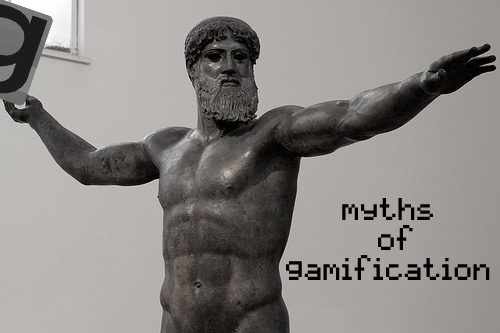
One of the biggest ideological debates in the games industry today is about the role, meaning, value and place of gamification. There has been almost every kind of discussion, from polite to threatening, political to academic and expert to amateur. And while the arguments and syntax vary, they seem to always end up in a place familiar to contemporary American culture: the religious ideological war. In fact, what we’re witnessing is more of a schism than an outright battle, and my sense is that both disciplines will ultimately be better for it.

In order to contextualize the discussion, I want to lay out the Top Four biggest mistakes, myths and misunderstandings that game designers have about gamification, and how they can improve their comprehension. At the same time, I want to help explain how gamification designers can benefit from accepting criticism through a meaningful filter that can be useful to advance the art and science of engagement.

Read More

Family of Heroes Game Helps Soldiers and Families Cope with PTSD

The Department of Veteran Affairs estimates that between 11 and 20% of veterans of the Iraq and Afghanistan wars suffer from PTSD.  Yet many soldiers who suffer from PTSD are reluctant to seek help and their loved ones may not know how to encourage them to do so.  Some researchers are now using games in health as a strategy to get veterans the help they need. “Family of Heroes” by Kognito is an online simulation that helps equip families and friends of veterans to recognize symptoms of post-deployment stress and encourage veterans to seek help at the VA.

Read More

Following Gamification Through Gartner’s Hype Cycle

Gamification has finally hit a significant speed bump—overinflation from hype and expectations. In a recently published Gartner article, in-house analysts have predicted that about 80% of gamified solutions will fail in reaching business objectives by 2014 due to poor design. This could be easily avoided if people would simply just use good gamification design, but that simply isn’t the case.

Read More

Designer Jesse Schell Joins the Speaker List for GSummit SF 2013

In addition to big names such as Will Wright, Tim Kring, and Kevin Werbach, Jesse Schell has been announced to be a speaker at GSummit SF 2013, taking place this April 16 – 18. Jesse’s academic work in games has spawned The Art of Game Design and an enormous DICE talk featured on TED, to supplement his current work as a professor of Entertainment Technology at Carnegie Melon and as the CEO of his own design firm, Schell Games…

Read More

$100,000 Cash Prize Available for the Next Top Gamified Health App

What better way is there to entice gamifiers and game-designers to work than to hold a friendly competition? The Robert Wood Johnson Foundation (RWJF) is holding a $200,000 competition to find the best game applications to improve individual and community health.

The Aligning Forces for Quality (AF4Q) Games to Generate Data Challenge will be an open contest that will challenge developing teams to take data from the RWJF and apply it to improving health care with games. This contest is the second cash challenge sponsored by the Aligning Forces for Quality, which previously challenged designers to create gamified applications that assisted healthcare practitioners in generating quality data.

Read More

The Code of Gamification Ethics

For the last two years, I’ve been quietly talking about a gamification code of ethics. The discussion tends to come up most often at dinner parties and during GSummit, but it’s also been a hot topic during debates about gamification’s role in the future. I firmly believe that part of the reason we get so much snark online for Gamification is not because it’s a passing fad, but rather because it’s a powerful force for change that threatens the existing order. While we could dodge the question of gamification’s potential to cause harm to society, I don’t think we should.

That’s why I want to start a dialogue with the whole community about a code of ethics for our industry — and we need your involvement.

Read More

Transform Loyalty Punch Cards for Customers with Customization and Guild Dynamics

In a recent study looking at why some massive multiplayer online games (MMOG) like World of Warcraft still commands millions of loyal players despite its eight year lineage, those engaging most with character customization and guilds were found to be the most loyal players. The TechCrunch article mentions the possibility for these elements to increase “virality”…

Read More

Gabe’s Gamification Revolution Featuring Richard Bartle

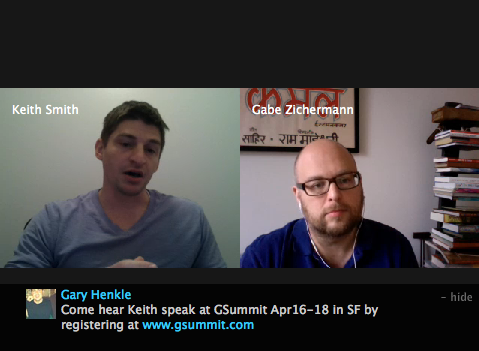
Each week on the Gamification Revolution web show, Gabe Zichermann answers all your burning gamification questions LIVE every Monday at 1pm ET/10am PT/1800 GMT. This week’s show features Richard Bartle, Visiting Professor at the University of Essex and the creator of the Bartle Player Types. Here’s a rundown on some of the topics they spoke about: Why we need to design for…

Read More