


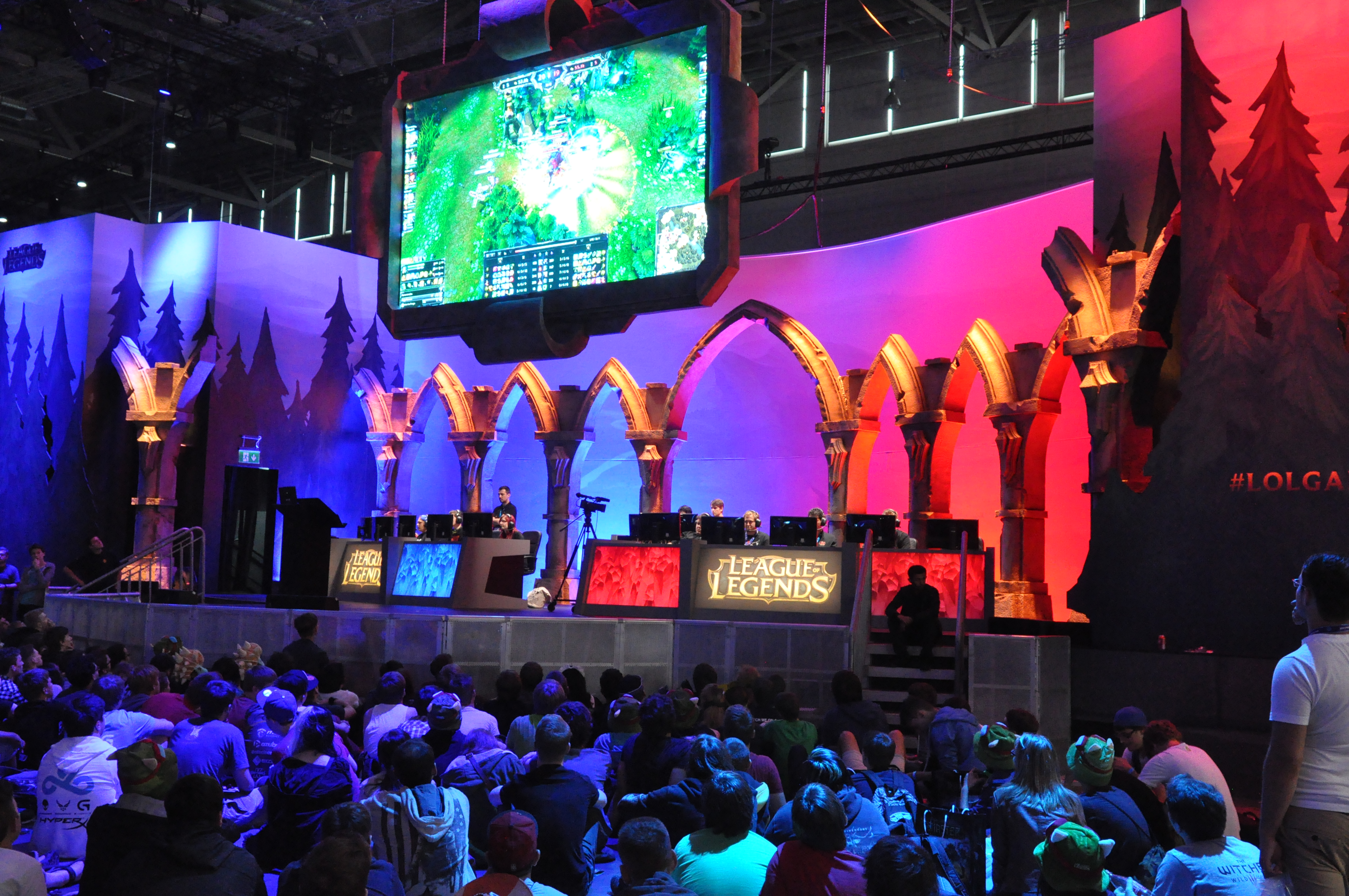
MOBA’s Promote Teamwork While Disparaging Negativity

For those unfamiliar with the term”MOBA”, it may be time to take notice of one of the fastest growing phenomenon within the gaming industry. MOBA’s, or Massively Online Battle Arenas, have greatly surpassed other popular gaming genres to become the most played games on the PC platform. This shift in the trends of PC players began in 2012 with the game title League of Legends, which has retained its throne ever since; with other MOBA’s such as DotA 2 and Smite creeping into the top ten as well. These types of games have become so popular that they are selling out seats at large venues as well as being covered by major sports networks like ESPN.


Read More

5 Examples Gamification in Consumer Engagement Space

The gamification market is estimated to be worth about $2.8 billion, having increased 10 fold over 3 years. Widely used in staff training or education, there is now a growing trend toward adding gamification to drive consumer engagement and loyalty. The online environment vastly increases the possibilities for the use of gaming to engage customers . You can turn your instructions into simulations that can demonstrate your products. Virtual tours have become popular for the travel industry and real estate industries. Virtual environments can also apply to the use of products. Customers can try products in a virtual environment and be rewarded for their efforts.

Read More

Redefining Consumer Market Research with OnePulse

With an eye toward international expansion, London-based consumer engagement app OnePulse recently closed a $1.07million seed investment round. Led by D5 Capital, AngelLab and LCIF, OnePulse has already signed over 300 clients looking for on-demand consumer insights. Major businesses and retailers including Aviva, Coca-Cola, and CGA Strategy, look to OnePulse mobile app users for instant responses and feedback.

Read More

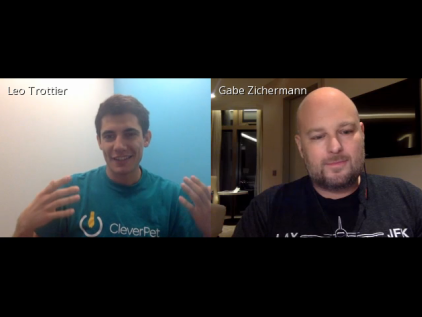
CleverPet: Fulfilling Idle Pets Cognitive Needs with Leo Trottier

Last week, we featured CleverPet Inc. founder & CEO, Leo Trottier to discuss about the company’s gamified device, CleverPet. Successfully funded on Kickstarter, the device provides engaging stimulation for a more active lifestyle desired by bored, lonely dogs.

Watch the full interview below to learn about:

  • How does CleverPet works and what are its capabilities?
  • How did the idea of creating a interactive gamified device for dogs came about?
  • What would game design looks like from a dog’s perspective? Would the design and interaction differ if it was made for cats?
  • How did the team go about tested the design gamified device?
  • What kind of complex behaviors the devices aims to instill beyond basic gameplay stimulation?
  • Were there concerns raised on the the impact of applying operant conditioning on pets?

Watch the video, listen on the audio podcast or subscribe to our iTunes channel below. Be sure to catch our next episode of the Gamification Revolution.

Read More

Modernizing Customer Loyalty Program With Canadian Tire Money

Loyalty programs have a long and varied history, with retailers rolling them out in different forms to entice longtime customers to continue spending with them. Canadian Tire, one of Canada’s largest automotive accessory retailers, has one of the oldest customer loyalty programs. Consumers who buy items with cash or credit cards earn paper bills that look like money. The Canadian Tire Money loyalty program has been in place since 1958.

Read More

Improving Personal Financial Management with Gamified Mobile App Jojonomic

If you were listing five subjects that seem impossible to gamify, you probably would list personal finance first. Singapore-based start-up Jojonomic thinks it has cracked the code with its new financial management application, offered as what its CEO and founder Indrasto Budisantoso says is the antidote to the very low level of financial literacy in the company’s target geographic market, which is South East Asia. The goal of the gamified mobile app, according to Budisantoso, former CEO of Groupon, is to facilitate personal finance management by minimizing the number of screens that a user had to work through in order to record transactions and by making it fun.

Read More

Exploring Travel Experiences with Shangri-La Hotel’s Love Journey

In 2010, Chinese e-commerce behemoth Ali-Baba decided to take steps to increase sales in the period between the October Golden Week holiday and Christmas. Ali-Baba knew that November 11 was already viewed as “singles day” and had been a special shopping day since the 1990s, presumably because the two “elevens” in the date roughly translated into “only one” and appeared to be “bare sticks” or singles. Single-handedly, Ali-Baba turned November 11 into the world’s biggest online shopping day, easily eclipsing the sales revenues generated by Black Friday and Cyber Monday, traditionally the biggest shopping days in the West.

Read More

Gamification Review Part III: Why Kotex’s Mis Momentos Campaign Succeeded

Part 1 and Part 2 of this gamification review series.

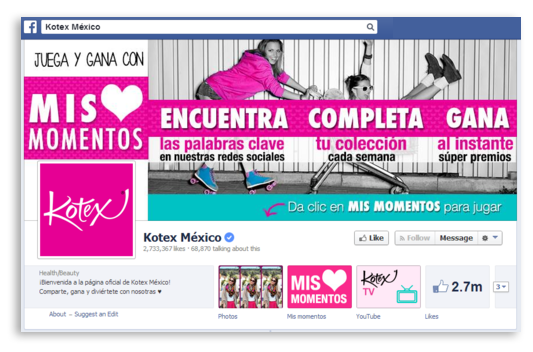
Mis Momentos is an exceptional case-study in the power of cutting-edge community engagement, choice-based campaign design, cumulative participation, and empowerment of individual voices – all towards driving stronger brand positioning & increased sales.

To design world-class community engagement & customer loyalty campaigns, you need to deliver compelling interactive activities, games, contests, and programs that not only establish a rich user experience but also inspire exploration, discovery, and meaningful choices.

Read More

Gamification Review Part II: Why Kotex’s Mis Momentos Campaign Succeeded

Start from Part 1 of this gamification review series.

The second time around, we went back to the drawing board with a fresh redesign to create a more fast-paced, 5-week campaign loaded with improvements, updates, and refinements. Although it seems like a very similar campaign at first glance, the changes touched virtually every part of the campaign with an eye towards creating deeper engagement, more balanced gameplay rules, better risk/reward elements, and greater flexibility.

Read More

Gamification Review Part I: Why Kotex’s Mis Momentos Campaign Succeeded And Yours Probably Won’t

Poorly-conceived customer engagement campaigns have flushed many well-intentioned marketing dollars down the proverbial toilet. According to research firm Gartner Inc., 80% of customer engagement initiatives fail due to bad design. Some of the biggest failures are epic, costing brands millions of dollars and resulting in horrific ROI metrics. One big online retailer I know recently used an agency that delivered a campaign so disastrous that when they calculated the cost of user acquisition, it worked out to over $9,000 per engaged user.

Ouch.

We recently wrapped a second successful collaboration with Kimberly Clark Mexico for their flagship Kotex product line – a customer loyalty activity called “Mis Momentos”. The campaign results were notable, with over 20,000 Kotex customers participating, high repeat play (63%), and strong ROI (8%+ reach conversion). The brand’s investment has now resulted in an extremely versatile and cost-effective asset for supporting a strong base of participating community members across an unlimited number of campaigns throughout its entire brand portfolio. But it wasn’t necessarily an easy path to get there…

Read More

Nike+: Building Community and Competitive Advantage with Gamification

Nike is a brand that has been engrained in the United States and around the world. Motivating people worldwide to “Just Do It”™ and be active; it is a beacon of health, wellness, fashion, and promoting physical activity. However, Nike hasn’t always been this successful. Arguably Nike’s most important product line is their running shoes. Nike has had fierce competition from Under Armour and Adidas for many years. Nike took a step forward and used gamification to increase customer engagement and brand awareness to take control of the running shoe market.

Read More

Gamification and Money: How Online Banks Engage Consumers

Banks tend to miss out on the benefits of gamification because they do not realize that consumers want to feel like they are in control of what they spend. Furthermore, banks tend not to worry about consumer engagement because what consumers do with their money is not a concept banks have leveraged with gamification. But what if banks made banking more like a game? When spending and saving money resembles a game, it has the potential to flip roles. The consumer takes control of what is in their bank account. Not the bank.

Read More