


intangible rewards

How to Incentivize Users with Non-Physical Rewards

A common feature of nearly all gamification implementations is the presence of a reward system. People are motivated by rewards but do they always have to come in the form of a cash prize or fancy gadget? Suchit Dash of ifeelgoods believes it doesn’t have to be.

Tangible Rewards come in many shapes and sizes, and though they may not scale super well, they can be transformative. See how you can use non-discount, tangible rewards to drive user loyalty and engagement in this fast-paced talk from rewards expert Suchit’s session at GSummit SF 2013.

Be sure to also subscribe to our YouTube channel to get the latest videos from GSummit SF 2013 as they’re released. You can also download a copy of Suchit’s presentation by downloading it here.

Read More
gamification certification

The Guide to Our New Gamification Certification Levels of Mastery

The first gamification design course was offered in 2011 at the inaugural GSummit in SF. Since then, nearly 1000 people have taken live and online courses that are eligible for certification through the Engagement Alliance. Additionally, tens of thousands have attended on-and-offline gamification courses that don’t offer any commonly accepted accreditation.

After many years of experimenting with design frameworks and through extensive discussion and consultation with industry, I’m pleased to announce a new rubric for design certification. This new program is based on best practices, designed to maximize the value of your education and help you deliver optimal results for your employer and your career. Here are the new levels of certification, and what they mean:

Read More
mobile ads

Case Study: The Effect of Presenting Ads as Rewards in Mobile Games

The challenge of monetization is about more than dollars and cents – it is about continuously enhancing the user experience. Many developers steer clear of monetization solutions, fearing that they will turn off users and cause drops in retention and engagement rates.

However, when ads are presented as personalized they can have favorable implications for user experience and engagement. Below, I will share some data that demonstrates a positive correlation between the implementation of such ads and an increase in overall engagement.

In order to provide some context, PaeDae is a premium ad network that leverages a “reward ad spec” to help app developers monetize. One of the biggest contributors to our success is our commitment to ensuring that reward ads look native, and blend seamlessly into a user’s overall game or app experience.

Read More

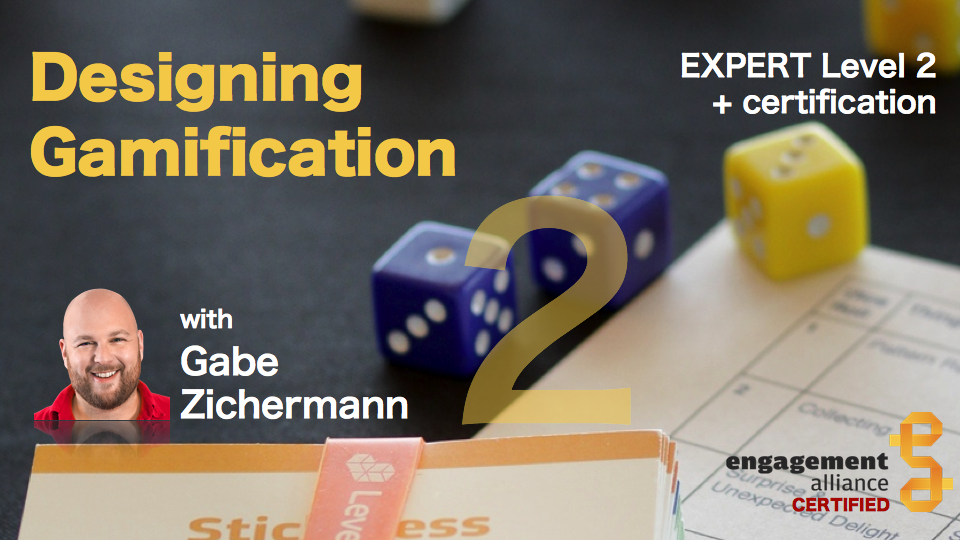
Get Certified in Gamification Design Online

I’ve been hard at work on a bunch of cool projects, and I wanted you to be among the first to know about my latest: you can now earn your first two levels of gamification certification online, at your own pace.

In partnership with Udemy, I’ve developed an all-new curriculum that teaches you the basics of gamification and engagement design in two parts:

1. Fundamentals of Gamification (LEVEL 1, BASIC)
2. Design Principles, Mechanics, Mastery & More (LEVEL 2, EXPERT)

Click on the two links above to check them out, watch a free lecture, and automatically take advantage of special, limited-time pricing for Gamification Co friends and partners.

Read More
john reynolds for restaurant.com

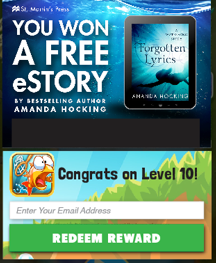
How Restaurant.com Creates Loyalty with Gamification

Restaurant.com is the largest source of dining deals in the nation. Despite the huge inventory of amazing offers, the company needed a way to create, sustain and socialize customer loyalty. So they turned to gamification with amazing results. Along the way, Restaurant.com learned some of the best — and worst — ways to create customer loyalty with gamification.

Learn from their lessons as Restaurant.com CRM Manager, John Reynolds, and Badgeville Producer, Zachary Bodnar, walk us through some design principles and lessons learned for achieving loyalty success in ecommerce.
Also, be sure to subscribe to our YouTube channel to get the latest videos from GSummit SF 2013 as they’re released. You can also download a copy of John’s presentation by downloading it here.
Read More
nicole lazzaro

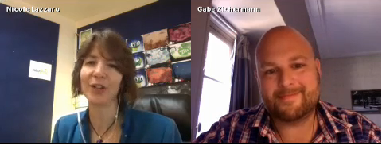
Nicole Lazzaro Explains The 4 Keys to Fun and Gamification

The Gamification Revolution is the only live gamification webcast featuring Gabe Zichermann and fellow gamification experts every week. Join us and have all of your gamification questions answered by these experts. Today we’ll be looking at our last week’s guest: Nicole Lazzaro, President of XEODesign.

Be sure to catch our next episode this Thursday, August 29 at 1PM ET/1800 GMT, where we will feature Karl Kapp, Assistant Director of Bloomsburg University’s Institute for Interactive Technologies and prominent eLearning/gamification expert.

Remember you can participate in the show if you sign-in and RSVP! Signing in will allow you to receive show reminders, ask questions, and even join Gabe and our guest for a live question.

In last week’s episode, we explored the idea of fun. Would anybody even care about gamification if it didn’t produce something that was fun to do? Gamification practitioners have a responsibility of understanding how a fun system plays into their overall design and Nicole Lazzaro, came on the show to explain the psychology of fun and her theory on the 4 keys to all the types of fun that exist. Watch the video below to get the full scoop on what it means to have fun!


Download this episode (right click and save)

Read More

NSA Gamifies Surveillance Training: Ethical or Questionable?

There is a recent Der Spiegel report on the NSA gamifying its infamous international surveillance program, XKEYSCORE. Gleaned from a secret report entitled, “Tales from the Land of Brothers Grimm”, it detailed training procedures that were used to motivate NSA agents who are new to the program. Gamification mechanics were used such as how agents could earn “skilz” points and “unlock achievements” as they effectively use the training program. What was startling was that the report indicated the training procedure changed the perception of its users opinion on surveillance after a certain period of time.

Here at Gamification Co, we have covered numerous examples where gamified systems have been used for good in solving problems across industries. Nonetheless, there is a need to address the elephant in the living room where gamification is used for questionable means.

Read More

The Psychology of Fun: Transform Awareness into Impact

Following up her main stage talk from GSummit 2012, Nicole Lazzaro took the main stage again at GSummit 2013 and gave us a new talk on how the emotional response from games can inspire people to take real actions for social impact.

We take a look at Nicole’s analysis on the psychology of fun and how her own game, Tilt World, was able to accomplish significant social impact by simply being fun.

Also, be sure to subscribe to our YouTube channel to get the latest videos from GSummit SF 2013 as they’re released. You can also download a copy of Nicole’s presentation by downloading it here.
If you have questions about this content or anything else related to gamification design, please join us tomorrow at 1PM ET as Nicole joins us as our live guest on the Gamification Revolution webshow.  RSVP and Sign-In to join the conversation!

Read More
mark goldstein

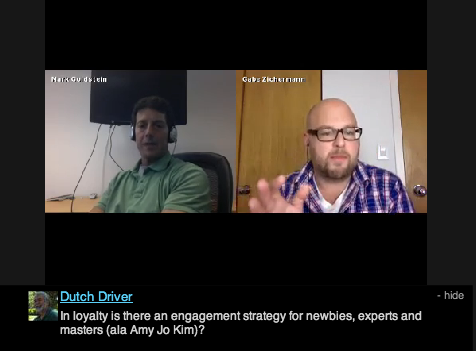
Mark Goldstein Explains the Problem with Modern Loyalty Programs

The Gamification Revolution is the only live gamification webcast featuring Gabe Zichermann and fellow gamification experts every week. Join us and have all of your gamification questions answered by these experts. This week’s guest was Mark Goldstein, Chairman of BackOps and loyalty industry veteran.

Be sure to catch our next episode this Thursday, August 1 at 1PM ET/1800 GMT, where we feature Tacy Trowbridge, who is the Head of Education Programs at Adobe. Watch the show to learn about all of Adobe’s gamified education initiatives!

Remember you can participate in the show if you sign-in and RSVP! Signing in will allow you to receive show reminders, ask questions, and even join Gabe and our guest for a live question.

In this week’s episode, Gabe and Mark discuss the problems that exist in modern loyalty, why they’re there, and how to overcome them. One great quote from Mark:

“The problem with most loyalty programs is that people simply don’t level up to get to the fun part”

What does he mean? Watch the episode below to find out:


Download this episode (right click and save)

Read More
stella grizont

How Playing Can Unlock Your Mind and Inspire You with Stella Grizont

How would you react if a truck showed up outside your door and you were told to scream inside it for a team-building exercise?

Stella Grizont is the founder of WOOPAH and she believes positive psychology and play are the keys to unlocking our creative sides. She took the stage at GSummit 2013, to tell us about how her studies in psychology led to this revelation and how we might be able to leverage these techniques for ourselves.

She explains

  • Core principles of positive psychology and its perspective on engagement.
  • What is play? What is a game? And what’s the difference?
  • How to use play to spark transformation

Check out the video below to see how play can help you and be sure to subscribe to our YouTube channel to get all the latest updates as they come.

Read More
bartle player types 3

A New Perspective on the Bartle Player Types for Gamification

If you have an interest in gamification, the likelihood is that you have heard of something called Bartle’s Player Types. This is a model that Dr. Richard Bartle created to describe the types of people who played Multi User Dungeon (MUD) games, what they wanted, how they acted and how they interacted. Initially 4 types were identified; Killer, Achiever, Socialiser and Explorer.

Later, he would expand on this and create a more detailed model that included 8 types; Griefer, Networker, Politician, Friend, Opportunist, Scientist, Planner and Hacker.

This model is popular in gamification as it gives a nice basis to consider types of user you may come across. It is worth noting a few things though. The first, this is not a taxonomy, it is a dynamic model that not only explains initial types, but their interactions and evolution over time. The other important point is that this model was designed for MUD games (or MMO’s as we now see them). This takes a couple of things for granted – the biggest being that players are there to play!

Read More
gsummit sf 2013 videos

GSummit SF 2013 Videos Are Coming Out to the Public!

If you joined us for GSummit SF 2013, then you’ve clearly seen how awesome our community is, amidst of sea of brilliant experts, food trucks, and a gamified conference experience. It is our job here at Gamification Co to proliferate the latest and greatest knowledge about the gamification industry, so we’re finally going to begin releasing all of our videos from GSummit SF 2013 over the next few weeks.

We’ll be posting each of the new releases on our blog but if you want to get each of them immediately, be sure to subscribe to our YouTube channel to get each video as they come.

To kick off the first video we’re releasing, we want to share a story about engaging audiences with a real sense of purpose. Jeremy Heimans, Co-Founder and Chief Executive Officer of…Purpose, shares his story about using narrative storytelling to transform engagement for corporations, non-profits and citizens with integrity and purpose.

Stay tuned as we release more videos every week! Also, if you’re interested in seeing a particular speaker on GSummit, sound off in the comments below!

Read More
long term engagement with gamification

5 Key Design Factors for Long-Term Engagement with Gamification

Did you ever lose track of time because of a game? And have you ever asked yourself how you ended up spending 4 hours playing Candy Crush?

Games are one of the most engaging things that we can find because they involve and fulfill almost all of our main human motivators and happiness factors while creating so much funbut some very special ones have this stickiness that makes us want to play them for a long period of time.

But…why?

Read More