



NSA Gamifies Surveillance Training: Ethical or Questionable?

There is a recent Der Spiegel report on the NSA gamifying its infamous international surveillance program, XKEYSCORE. Gleaned from a secret report entitled, “Tales from the Land of Brothers Grimm”, it detailed training procedures that were used to motivate NSA agents who are new to the program. Gamification mechanics were used such as how agents could earn “skilz” points and “unlock achievements” as they effectively use the training program. What was startling was that the report indicated the training procedure changed the perception of its users opinion on surveillance after a certain period of time.

Here at Gamification Co, we have covered numerous examples where gamified systems have been used for good in solving problems across industries. Nonetheless, there is a need to address the elephant in the living room where gamification is used for questionable means.

Read More
keas-mark-koerner

How Keas is Engaging Employees with Wellness and Gamification

The Gamification Revolution is the only live gamification webcast featuring Gabe Zichermann and fellow gamification experts every week. Join us and have all of your gamification questions answered by these experts. This past week’s guest was Mark Koerner, VP of Product at employee wellness platform Keas.

Gabe and Mark go through some of the features of Keas and discuss how organizations can improve their internal processes by engaging with employee health. Learn about the intricacies of data privacy, the metrics for success, and Keas’ general approach of gamification for health in the video below:


Download this episode (right click and save)

Read More

Farm Defenders is a Gates-Funded Training Game for Actual Farmers

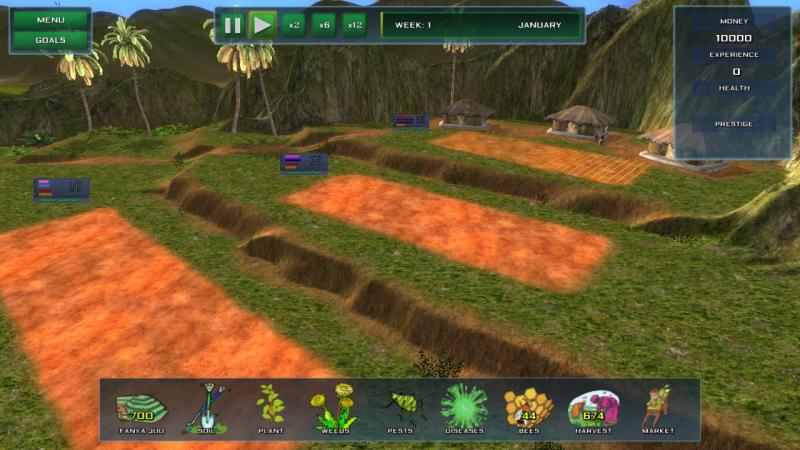
As the worldwide agricultural market becomes increasingly commoditized, the existence of a traditional farmer is becoming more and more scarce. However, many rural villages in Africa still require the skills of a trained farmer in order to support their local economy and community. We’ve reported on one community in Kyrgyz who has used a Farmville-esque game to support local farm operations but Fast Company reports on a new game supported by the Gates Foundation that aims to support these communities through learning. Farm Defenders is a hyperrealistic simulation training game that will be used as a tool for training extension workers, which are government-contracted consultants who teach villagers scientific knowledge through farming.

Read More

Gamified Management Processes Can Boost Employee Performance

Many people think of gamification as a consumer targetted model. While gamification techniques are particulary apt at increasing consumer involvement, they can also be applied to the employee management process for improvement.

Maintaining a consistent working attitude by employees is important for any business to keep healthy productivity. It takes effort by management to encourage employees to work for higher goals. It requires investment by management to identify where employees struggle in the process. Utilizing a gamification model within the management process can help businesses save time and reduce costs while increasing the bottom line.

Read More

GCo’s Picks: Games for Training Skills at GSummit 2013

Adobe and Delta Air Lines both use gamification to drive engagement with their products, which in turn produces a kind of learning and subsequent new behavior for the engaged users. Learning is taking place in this regard but Adobe and Delta have managed to use gamification for an even higher level of learning.

Rather than creating general classes for learning, Adobe and Delta have successfully been able to use games to train people for tasks they want to accomplish and they will both be represented at GSummit 2013 to discuss their training games.

Read More

Market Ripe for Health and Wellness Gamification Startups

A new study shows that employers are increasingly relying on gamification to increase employee health engagement. According to Buck Constultants, 62% of employers consider gamification the most effective strategy in encouraging employees to improve their health and at least 31% will adopt at least one new health-related gamification strategy in the coming year.

As healthcare costs continue to rise, employers are facing new pressure to encourage employees to be proactive about their health. While there is still insufficient data to determine whether employee health incentive programs are actually saving companies money, it seems that most businesses are not waiting to find out.

Read More

Moving Beyond Points and Badges: Gamification 2.0

The technology and business world has been abuzz with a new term– gamification, defined as the use of game elements in everyday scenarios in order to drive engagement and make work more interesting. This has been seen by some as a game changer (pun unintended) to make boring tasks fun & drive motivation, while others see it as a modern and web friendly extension of the ubiquitous reward and recognition techniques already being used by companies in some form or another.

But the question is, is it always going to be just about points and badges? The answer has to be an emphatic no. While points and badges have served admirably in terms of providing social recognition and motivation to millions of users already, their novelty is rubbing off, and incremental gains are dropping alarmingly.

Read More

Study: First-Person Shooters Can Improve Multitasking Ability

Parents might have a tough time arguing against videogames if their kids begin to learn about all of the potential benefits from playing them.

Just a few days ago, we reported on a study which showed that dyslexic children could improve their reading skills and attention span by playing fast-paced videogames. Now another study has emerged, which has shown playing first-person shooter videogames like Call of Duty can improve multitasking abilities.

Read More

The Rising Problem of Employee Engagement with Elise Olding

The Gamification Revolution is the only live gamification webcast featuring Gabe Zichermann and fellow gamification experts every Thursday at 1 PM EST/10 AM PST/1800 GMT. Join us and have all of your gamification questions answered by these experts.

This week’s guest is Gartner Research Director, Elise Olding! Elise has been heavily studying the science of motivation and engagement with the power of people. In this week’s episode you can be sure to learn about:

  • The emerging interest of using games to engage people within organizations
  • How small businesses can leverage gamification without expensive tech.
  • The existence of gamification divisions in organizations like NTT Data
  • Using explicit games social networks as an engagement tool for workspaces
  • Increasing executive acceptance of gamification as a strategy

This was a great week filled with user-participation and questions! Check out the full video below:


Download this episode (right click and save)
Be sure to catch this week’s episode featuring Robert Torres of the Gates Foundation for his work in applying gamification for social good.

You can now catch the Gamification Revolution every Thursday at 1PM EST/10 AM PST/1800 GMT.

Read More

Why Wibidata’s Portal 2 Recruiting Game Was So Successful

The gamification of recruitment has been a very creative way to find and bring talent to your company without going through a costly recruiter. Given the recent success of recruiting games by Dominos, Quixey, and even the Air Force, it’s become clear that using games can be a viable strategy. One startup by the name of Wibidata took this idea to the next level and hired a game designer to create a Portal 2 game mod that would get over 75,000 impressions and 100 qualified job applicants in a single week.

Read More

Lush Quests Combines Gamified Training and Cloud Computing

In their common endeavor to engage its employees, enterprises have been slowly embracing the concept of gamifying employee training programs and handmade cosmetics firm Lush is no exception.

Lush’s training program, Lush Quests bears the markings of a gamified training system where employees are introduced to Lush’s brand and products through an interactive story filled with challenges and rewards. Upon completion of the narrative, users are then given a 10 minute quiz to reaffirm what they have learned from the material. Thus far, over 2,000 Lush employees have completed this online training program.

Read More