influent

Influent Turns Spatial Memorization into a Language Learning Game

If you’ve ever attempted to learn a second language, you might have found yourself overwhelmed by this apparently daunting task, or even worse, got yourself disengaged because of the dryness of traditional textbooks and lecture formats they are conveyed in.

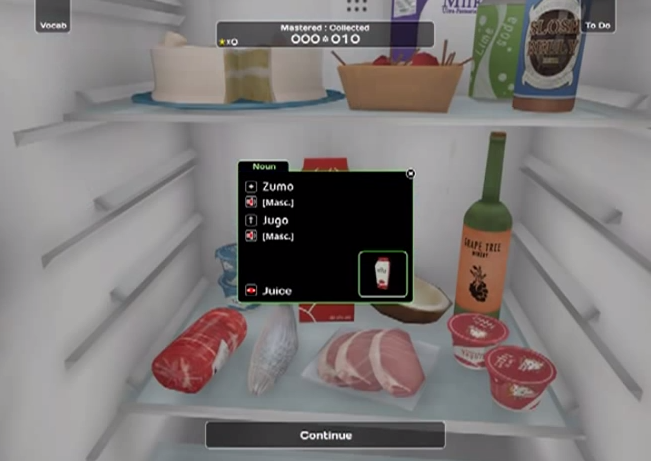
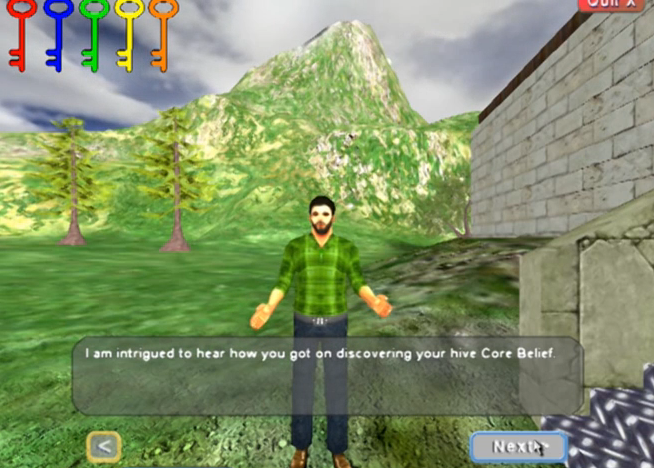
Don’t give up just yet! There are a couple of game-like methods out there for you to diverge from the traditional learning setting. This year during GDC week, Influent was released. Aimed to be a “Language Game Redefined”, the game enables players to have a self-directed learning experience, immersing them in a 3D house, fully furnished with a rich amount of everyday objects that can be interacted with in the chosen language.

Read More
unicef tap project

UNICEF’s Tap Project Will Donate Water for Smartphone Abstinence

This year, the campaign for UNICEF’s Tap Project is challenging us to set our phones aside for a few minutes in exchange for a clean water donation. Just to give you an idea of the challenge: spending a mere 10 minutes away from your phone provides a full day of clean water to a child in need. The longer you go, the more water is donated.

“Some of us can’t go for more than a few minutes without checking our cell phones. Imagine what it’s like to go days—or longer—without safe drinking water” says Caryl Stern, President and CEO of the U.S. Fund for UNICEF.

Read More

The Winner Effect: How Success Affects Brain Chemistry

There’s a very interesting phenomena in biology I’ve been wanting to link to gamification called “the winner effect.” When any animal, from fish to humans, wins a contest, they have a large release of testosterone and dopamine in the brain. Over time this changes their brains structure and chemical makeup, making them more confident, smarter, and able to take on larger challenges than before.

Read More
stella grizont

Using Happiness for Engagement with Stella Grizont

Stella Grizont, Founder of woopaah! has been a Gamification Co regular and prominent GSummit speaker on the topic of positive psychology and happiness.

We were lucky enough to grab her to join our latest webshow to dive further into the science behind happiness and how a positive focus on psychology can have a significant impact on engagement.

She states:

“If you want others to be engaged, how can you embody that? Happiness.”

Watch the full video below for the full interview and be sure to catch our next guest this Thursday with Guy Halfteck,  the CEO and Founder of Knack, a company dedicated to using games in order to discover our full talents.


Download this episode (right click and save)

As a special offer for all our readers, Stella Has been kind enough to offer a 50% code for her newest course on UDemy on The Science of Happiness: Hacks & Skills to Flourish.

Use code GABE for a discount on her online class!

Remember to check our channel every Thursday at 1PM ET for a new guest on the Gamification Revolution webseries and more great content like this.

Read More
narrative in gamification

Embracing Paradoxes and Narratives in Education

How Gaming Keeps Us Learning for Longer “In the realm of strategy, only contradiction and paradox work. Common sense and straightforward linear logic always fails” – Edward Luttwak According to Charles Handy, success belongs to those who learn to embrace complexity by reconciling the contradictions of this world. Gabe Zichermann gives an example of these contradictions with…

Read More
Andrea Kuszewski gsummit

Andrea Kuszewski on The Science of Motivation: Neurology, Psychology, Gamification

Gamification has proven to be a powerful tool in driving change across nearly all environments—business, personal goals, even education. What is it about gamification that makes it so successful in changing behavior? It isn’t just about points or badges, or earning little gold stars. The best gamification strategies are all about engagement, driven by motivation.

Science tells us that motivation is the single most important factor when it comes to learning and changing behavior—far more important than breadth of skill, or even innate talent. Increase motivation, and you will increase learning—surpassing limits in ways you never imagined—no matter the subject, domain, or context.

Join cognition expert Andrea Kuszewski for a lively, non-technical discussion of the science of motivation, dissecting that ‘magical’ process going on in the brain that is such a critical factor in engagement and learning in this GSummit SF 2013 talk. Watch the full video below!

Also, be sure to subscribe to our YouTube channel to get the latest videos from GSummit SF 2013 as they’re released. You can also download a copy of this presentation by downloading it here.

Read More
michael wu

The Psychology Behind Intrinsic and Extrinsic Motivation with Michael Wu

The Gamification Revolution is the only live gamification webcast featuring Gabe Zichermann and fellow gamification experts every week. Be sure to catch our next episode tomorrow on Wednesday, October 9 at 1PM ET/1800 GMT, where we will feature  prominent gamification community figure, Yu-Kai Chou.

Remember you can participate in the show if you sign-in and RSVP! Signing in will allow you to receive show reminders, ask questions, and even join Gabe and our guest for a live question.

Last week, Lithium’s Chief Scientist Michael Wu came on the show to discuss the psychology behind engagement and motivation. During the show he mentions the following on the morality of motivating others intrinsically:

“Engaging with people through their intrinsic motivations isn’t good or bad…it’s just the way it is”

What does he mean? Watch the full episode below to get a thorough explanation of the meaning behind intrinsic/extrinsic motivation, how motivation changes over time, and a glimpse into Lithium’s IT security practices:


Download this episode (right click and save)

Read More
nicole lazzaro

Nicole Lazzaro Explains The 4 Keys to Fun and Gamification

The Gamification Revolution is the only live gamification webcast featuring Gabe Zichermann and fellow gamification experts every week. Join us and have all of your gamification questions answered by these experts. Today we’ll be looking at our last week’s guest: Nicole Lazzaro, President of XEODesign.

Be sure to catch our next episode this Thursday, August 29 at 1PM ET/1800 GMT, where we will feature Karl Kapp, Assistant Director of Bloomsburg University’s Institute for Interactive Technologies and prominent eLearning/gamification expert.

Remember you can participate in the show if you sign-in and RSVP! Signing in will allow you to receive show reminders, ask questions, and even join Gabe and our guest for a live question.

In last week’s episode, we explored the idea of fun. Would anybody even care about gamification if it didn’t produce something that was fun to do? Gamification practitioners have a responsibility of understanding how a fun system plays into their overall design and Nicole Lazzaro, came on the show to explain the psychology of fun and her theory on the 4 keys to all the types of fun that exist. Watch the video below to get the full scoop on what it means to have fun!


Download this episode (right click and save)

Read More

The Psychology of Fun: Transform Awareness into Impact

Following up her main stage talk from GSummit 2012, Nicole Lazzaro took the main stage again at GSummit 2013 and gave us a new talk on how the emotional response from games can inspire people to take real actions for social impact.

We take a look at Nicole’s analysis on the psychology of fun and how her own game, Tilt World, was able to accomplish significant social impact by simply being fun.

Also, be sure to subscribe to our YouTube channel to get the latest videos from GSummit SF 2013 as they’re released. You can also download a copy of Nicole’s presentation by downloading it here.

If you have questions about this content or anything else related to gamification design, please join us tomorrow at 1PM ET as Nicole joins us as our live guest on the Gamification Revolution webshow.  RSVP and Sign-In to join the conversation!

Read More

gNats Island Helps Therapists Communicate with Patients through Virtual Exploration

A well-designed gamification system will often consider the player types of the audience that will be using it and seek to engage people based off what intrinsically and extrinsically motivates them.

While there are various gamified health systems out there, none of them have really looked towards engaging the the explorer-type like gNats Island — a game designed to help therapists communicate with mentally-challenged adolescents by exploring a virtual world alongside with them.

Read More
stella grizont

How Playing Can Unlock Your Mind and Inspire You with Stella Grizont

How would you react if a truck showed up outside your door and you were told to scream inside it for a team-building exercise?

Stella Grizont is the founder of WOOPAH and she believes positive psychology and play are the keys to unlocking our creative sides. She took the stage at GSummit 2013, to tell us about how her studies in psychology led to this revelation and how we might be able to leverage these techniques for ourselves.

She explains

  • Core principles of positive psychology and its perspective on engagement.
  • What is play? What is a game? And what’s the difference?
  • How to use play to spark transformation

Check out the video below to see how play can help you and be sure to subscribe to our YouTube channel to get all the latest updates as they come.

Read More

Are Brain Waves the Next Step for The Quantified Self?

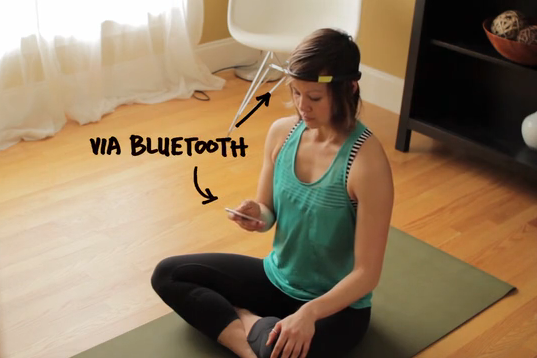
Activity trackers have become very popular among fitness enthusiasts, quantified-selfers, and gadget fans but are they making any sort of difference? I had mixed feelings about the Nike Fuelband when I reviewed it a year ago and Wired thinks it isn’t making you any healthier either. But maybe these glorified bluetooth accelerometers are missing a crucial feature: brainwave monitoring

Read More

The Road Show Puzzle Game Improves Coginition Speed For Seniors

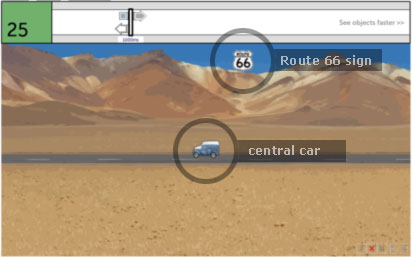
Games always don’t need the flashy graphics paired with capturing audio to make it engaging. Clear objectives and a desire to compete against the self is another effective method for improving skills through a game. According to Mashable, Researchers at the University of Iowa have shown this through their recent success through Road Show, a visual puzzle game aimed at improving senior citizen cognition.

Read More

Prominent Gamifiers: Andrea Kuszewski on the Science of Gamification and Motivation

What makes receiving a badge for completing a task so exciting? Why does seeing a progress bar almost full make us itch until we finish it? Gamification—the combination of game-design principles and elements—implements cognitive psychology and decision-making theory as its scientific foundation. If gamification were stuffed shells, science is the shell, and everything else is stuffing.

Read More