



Emory Uses Halo To Teach Women’s, Gender, and Sexuality Studies

Starcraft II teaches game theory and multivariable calculus. World of Warcraft gives insight to instructors on how they should structure the classroom environment. Minecraft has even become mandatory in a Swedish school’s curriculum as it teaches urban engineering concepts. To add to this growing list of games for education, Emory PhD Student Samantha Allen has incorporated Halo into her lesson plans for teaching intersectional theories of oppression for her Women’s, Gender, and Sexuality Studies (WGSS) introductory course. This is what I would call an interesting juxtaposition as it bridges the gap between the macho Halo protagonist, Master Chief with sensitive global issues of rights and accessibility to all.

Read More

Octalysis: Design Breakdown of the Speed Camera Lottery

Originally proposed to the The Fun Factory by Kevin Richardson of San Francisco, the Speed Camera Lottery was implemented by the Swedish National Society for Road Safety on site in Stockholm, Sweden in November 2010. Using existing traffic-camera and speed-capture technologies, the Speed Camera Lottery device would photograph all drivers passing beneath it. Each vehicle’s speed was displayed to the drivers passing by and recorded by the system. Speeders would be photographed and issued a citation, with the proceeds going into a cash fund. Drivers who obeyed the speed law would also be recorded and entered into the lottery, where they would be eligible to win some of the money from the speeders.

This case study has been seen by almost everyone within the gamification industry, but how can we learn to create an innovative solution like this by ourselves for our own projects? The answer for that is to dig deeper into the motivating factors involved by examining the project through the Gamification Framework Octalysis.

Read More

Hakitzu Excites Children to Become Black Belt Coders

In 2009, Rovio launched Angry Birds, one of the first games to make use of the mobile platform. In 2013, this infographic claims that there are 263 million active monthly users, and every other new cell phone purchased has the game downloaded onto it.

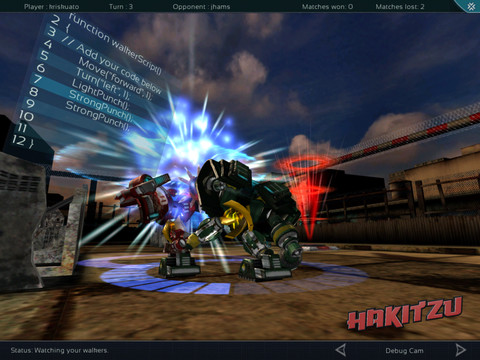
Kuato Studios, a development studio created from SRI International (the people who sold Siri to Apple) and Horizon Ventures (VC firm responsible for their investments in Facebook, Spotify, and Summly), is looking to take advantage of mobile platforms to a further level. Instead of crashing birds into objects, they want to use battle robots to make learning how to code fun. Wait, learning how to code can be fun?

Read More

What Attendees are Saying About GSummit 2013: Day 1

A Focus on Our Favorite Tweets from GSummit 2013. GSummit 2013 is fast underway and attendees aren’t wasting any time tweeting about their experience here. Everyone attending is actively participating and giving feedback by posting real-time reactions to Twitter during talks, events, and even the awesome lunch trucks. Between Mario Herger’s Enterprise Gamification Certification Workshop…

Read More

Why Gamification is Important as a Gamer

As a lifelong gamer I’ve always considered video game mechanics to be in a league of their own. I find gaming to create a sense of interaction and engagement not found in other media. Whether it’s an experience point system such as seen in a role-playing game (RPG) or an acquired ability to problem solve from a puzzle game, there’s something special about gaming that appeals to our emotions to make us invested in a story or idea.

Read More

Why Gamification Is Important as a Young Professional

When I first heard of gamification I was working at a big data internship with Infosys in Bangalore, India. My mentor explained it to me as “bringing games to the world to drive creativity, production, and behavior change.” I remember calling my parents shortly after to tell them, “Remember all those hours I spent playing Donkey Kong Country, Super Mario, Metroid, and FIFA. Well, I don’t think it is fair for you to yell at me anymore for wasting my time. Have you heard of gamification? Well let me tell you about it…..”

Read More

Foursquare and the Fun Gap: What Foursquare Should Have Been

Today Foursquare announced a new round of debt-based financing amounting to $41M in loans and convertible notes. It has been controversial, because debt-based financing suggests the company has a significant performance problem (Jason Gelman has a good wrap-up of the spirited discussion). Foursquare’s problem has become increasingly clear to Gamification folks over the past two years – it’s just not fun anymore. In the transition from a (great) game to a (good) loyalty program to a (mediocre) recommendations engine, they lost the plot, alienated customers and wasted a ton of resources and time.

Read More

Introducing ReadSocial App: A Revolutionary Way to Read

In conjunction with the release of Gabe Zichermann and Joselin Linder’s newest book, The Gamification Revolution, also comes the release of ReadSocial App: the world’s first gamified social reading application by Dopa Labs

ReadSocial App creates social communities around books, allowing readers to connect directly with authors, discuss hot topics from the book, and deepen their understanding about the book’s ideas.

Read More