



Gamification Review Part I: Why Kotex’s Mis Momentos Campaign Succeeded And Yours Probably Won’t

Poorly-conceived customer engagement campaigns have flushed many well-intentioned marketing dollars down the proverbial toilet. According to research firm Gartner Inc., 80% of customer engagement initiatives fail due to bad design. Some of the biggest failures are epic, costing brands millions of dollars and resulting in horrific ROI metrics. One big online retailer I know recently used an agency that delivered a campaign so disastrous that when they calculated the cost of user acquisition, it worked out to over $9,000 per engaged user.

Ouch.

We recently wrapped a second successful collaboration with Kimberly Clark Mexico for their flagship Kotex product line – a customer loyalty activity called “Mis Momentos”. The campaign results were notable, with over 20,000 Kotex customers participating, high repeat play (63%), and strong ROI (8%+ reach conversion). The brand’s investment has now resulted in an extremely versatile and cost-effective asset for supporting a strong base of participating community members across an unlimited number of campaigns throughout its entire brand portfolio. But it wasn’t necessarily an easy path to get there…

Read More

Gabarello: Immersive Gamified Physiotherapy Tool for Children

Innovations in the video game industry over the last several years have not only made for high hopes in creating the better gamification of rehabilitation exercises but could also bring those innovations into homes. Games like Gabarello for the Lokomat designed in combined efforts by the Zurich University of the Arts, the University Children’s Hospital Zurich, and the Institute for Neuropsychology and Sensory Motor Systems Lab created opportunities for children and perhaps now adults with lower body motor skill loss. If gamification can help patients improve their mental outlook and physical capabilities, then this method of rehabilitation should incorporated whenever possible.

Read More

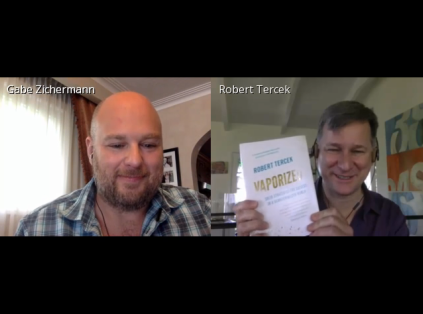
Vaporized: Strategize For The Dematerialized Future with Robert Tercek

Last time, we featured President and founder of General Creativity, Robert Tercek to discuss his newly released book, “Vaporized: Solid Strategies for Success in a Dematerialized World”. Robert reveals how every aspect of society and economy will be changed with the rise of digital technology and how we ought to prepare to face it head-on.

Last time, we featured President and founder of General Creativity, Robert Tercek to discuss his newly released book, “Vaporized: Solid Strategies for Success in a Dematerialized World”. Robert reveals how every aspect of society and economy will be changed with the rise of digital technology and how we ought to prepare to face it head-on.

Watch the full interview below to learn about:

  • How does vaporization affect the individual’s ability to relate to one another?
  • Does the trend of vaporization with its connection to virtual items and games reflect a shift away from a capitalistic, ownership economy?
  • Will people pay for virtual items as much as how physical items are valued in the envisioned dematerialized future?
  • What is the tension for leaders who are leading the way for vaporization while being masters of the attention economy?
  • How are large and small companies responding to the vaporization economy and which will gain the most advantage?
  • How does the current organizational structure of the film and TV industry represent the future direction of efficiency?
  • How will training executives manage the advent of vaporization while having to provide the necessary skills needed for this new economy?

Watch the video or listen on the audio podcast below and be sure to catch our next guest, Amy Jo Kim on the Gamification Revolution.


Download this episode (right click and save)

Read More

How Walmart Used Game-Based Training to Improve Worker Safety

Warehouses and distribution centers are busy facilities with lots of moving parts. They’re also dangerous places where stacked pallets and forklifts can lead to workplace injuries. Those challenges are magnified at a global company, like Walmart, which must make sure that its widely dispersed workforce uniformly follows corporate safety procedures. The retailer found a way to improve worker training and reduce workplace injury through gamification

Read More

U.S. Army Begins Search for Next-Gen Game Based Training

The U.S. Army Program Executive Office for Simulation, Training and Instrumentation (PEO STRI) put out a request for information last month entitled, “Games for Training (GFT) Next Generation Game (NGG).” In the release, the division made clear that a push towards updating their game based training programs is an absolute priority and that the search for interested vendors with applicable technologies has begun.

Read More

SCRIPT Helps Stroke Patients Recover with Physical Therapy Games

A stroke can result in devastating injury, such as impediments to speech and muscle movement. Survivors of stroke must go through physical therapy to rebuild their muscles and regain the ability to use their hands. This therapy can be productive, leading to restored hand function. While these exercises are helpful, they are not all that interesting. Many patients say that they find them repetitive and boring. But a new medical device that facilitates muscle movements in conjunction with computer games is showing potential as a new application of games in health care.

Read More

PwC’s Multipoly Boosts Employee Recruitment and Retention

The human resources department of any company has the tricky task of trying to recruit the best candidates, then keeping them on staff once they’ve been hired. It’s a tall order. With most job searches now conducted over the Internet, a job candidate can be lost with a single click. Accounting and consulting firm Pricewaterhouse Coopers wanted to see if it could do a better job with recruiting and retention.

Read More

Verizon Franchise Finds Employee Engagement Winner with FantasySalesTeam

It’s hard to overstate the popularity of fantasy sports. Many Americans spend considerable amounts of time tweaking their assembled teams of athletes in a virtual competition against other players. They do it out of the fun they have in researching their teams, competing against colleagues, and hopefully, winning their leagues. Many companies have tried to tap into elements of sports competition as a way of driving their employees to work harder or meet targets with varying degrees of success. One of them, Wireless Zone, which is the largest independent Verizon Wireless franchise in the United States, found its employee engagement solution through an application that takes its cue from the same motivations that make fantasy sports both popular and engaging.

Read More

SuperBetter: Improving Individual Resilience with Jane McGonigal

Last time, we featured author, inventor and co-founder of SuperBetter, Jane McGonigal to discuss about her upcoming new book, “SuperBetter: A Revolutionary Approach to Getting Stronger, Happier, Braver and More Resilient”. Supported by a decade’s worth of scientific research, Jane reveals how adopting a “gameful” mindset can help cultivate new powers of recovery and resilience in everyday life.

Watch the full interview below to learn about:

  • What were the challenges of of turning a gameful system into a scientific proven approach?
  • Are there conditions that games/gamification/gameful thinking would not be able to help improve an individual’s well being?
  • How does Superbetter and games in general contribute to the development of a person’s resilience?
  • Does gameplay in the virtual world provide sufficient impact in the “real” world?
  • How would a user experience SuperBetter if they are lacking social connections or “allies”?
  • How does the Tetris Effect improves an individual’s self control in memory recollection rather than erasing memory in trauma research?
  • Why does Jane introduces readers to the concept of gameful thinking and a series of small games introduced through the medium of a book?
  • How does Jane overcome environmental resistance and groups who are bias against games?

Watch the video or listen on the audio podcast below and be sure to catch our next episode of the Gamification Revolution.


Download this episode (right click and save)

Read More

Habitica Battles Procrastination With Gamified Lists and Virtual Rewards

Do you find yourself struggling to complete daily tasks, or organize your daily schedule? Habitica is a gamification mobile app that encourages players to control and structure their lives in a virtual setting. Habitica treats your life like a role-playing game, with the ability to earn new equipment, pets, mounts, and more, simply by completing listed tasks. You assign your own tasks under three categories: habits, dailies, and to-dos. When you have finished a task in real life, you can check it off on your Habitica page for instant gold or item rewards!

Read More

UCSF Hospital Uses Gamification to Increase Job Satisfaction and Performance

The medical field is hectic: stressful on good days, devastating on bad days. Amongst all the chaos, individuals are completing crucial tasks that can be the difference between life and death for a patient. The work done by medical professionals and other hospital staff often goes unnoticed. The leaders at UCSF Bennioff Children’s Hospital decided to make a change.

Read More

Gamified Design Review: A Follow-up Analysis Of Duolingo (part 2)

Although I haven’t been particularly interested in getting my Duo a fancy robe or other sort of outfit, users that get a kick from customizing their avatar probably do so. Let’s take a peek behind this door and imagine for a second the opportunities by further developing user avatars’ customizing options. I wonder if the app creators have considered the business deals that could potentially come together on this end.

Read More

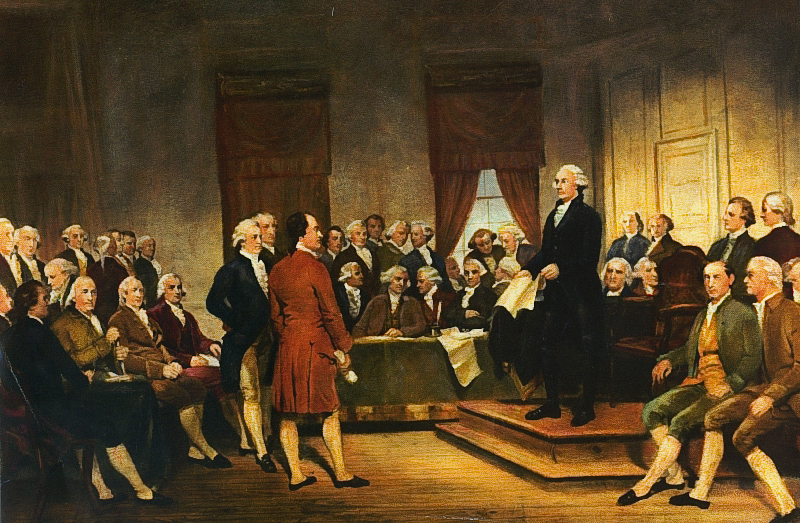
Georgetown University Applies Gamification To Teach The US Constitution

The Washington Examiner recently ran a story about a new video game that teaches the United States Constitution by casting the student players in the role of constitutional lawyers. The game is called “Do I Have a Right,” created by a company called iCivics. Playing the game is part of a three-week college-level course run by Georgetown University in Washington D.C. that teaches high school students subjects ranging from international relations to politics as part of a summer program run by the Junior State of America.

Read More