



brian burke

Gartner’s Latest Gamification Research for 2014 with Brian Burke

Brian Burke is a Gartner analyst specializing in enterprise architecture and gamification. His research led to the infamous prediction stating “80% of gamification initiatives will fail by 2014 due to bad design” and Gartner thinks that prediction is still on track for 2014.

We wanted to get more information on this topic so we were lucky enough to have Brian Burke himself join our weekly Gamification Revolution webshow to discuss his observations on gamifying organizations, new research, and information on his upcoming book. Watch the following video to learn about

  • Transitioning from using gamification as a tactic into a strategy
  • How organizations can  go beyond just jumping on the gamification bandwagon
  • Using gamification to discover underlying business problems.
  • How have we seen organizations balance between fun mechanics and presentation for maximum work space efficiency?
  • And the evolving pathos around gamification in the enterprise

Check out the full video below and be sure to see our next episode this Thursday at 1PM ET featuring Monica Cornetti, an expert specializing in low-tech training gamification. Sign-up and get show reminders!


Download this episode (right click and save)

Read More
nanodoc

NanoDoc is MIT’s “Fold.It Solution” for Crowdsourcing Cancer Research

Given the massive success of Fold.It and it’s crowdsourced approach to tackling protein folding to fight AIDS, it’s not surprising that other researchers are adopting this model for other applications as well.

Enter NanoDoc, a scientific simulation/puzzle game that will allow bioengineers and the general public to design nanoparticle strategies to treat cancer.

If it sounds futuristic, it totally is.

Read More
Andrea Kuszewski gsummit

Andrea Kuszewski on The Science of Motivation: Neurology, Psychology, Gamification

Gamification has proven to be a powerful tool in driving change across nearly all environments—business, personal goals, even education. What is it about gamification that makes it so successful in changing behavior? It isn’t just about points or badges, or earning little gold stars. The best gamification strategies are all about engagement, driven by motivation.

Science tells us that motivation is the single most important factor when it comes to learning and changing behavior—far more important than breadth of skill, or even innate talent. Increase motivation, and you will increase learning—surpassing limits in ways you never imagined—no matter the subject, domain, or context.

Join cognition expert Andrea Kuszewski for a lively, non-technical discussion of the science of motivation, dissecting that ‘magical’ process going on in the brain that is such a critical factor in engagement and learning in this GSummit SF 2013 talk. Watch the full video below!

Also, be sure to subscribe to our YouTube channel to get the latest videos from GSummit SF 2013 as they’re released. You can also download a copy of this presentation by downloading it here.

Read More
loyalty

What’s The Difference Between Loyalty Programs and Gamification?

Whenever I start talking about gamification, one of the first questions that I get asked is this: how is it different from loyalty programs?

As part of my MBA in the Management of Technology and Innovation at Ryerson University, I was tasked with writing a major research paper on a business topic of my choosing. As a gamer, I was extremely interested in the rising trend of gamification. Aside from the question about loyalty programs, a lot of small startups I talked to were interested about this “gamification thing they heard of”, but really had no idea where to begin or how to use it. When I came across the CARROT todo list, I was amazed at its simplicity and execution. It pushed me over the edge, and made me really want to find out exactly how gamification was being used.

Read More

Mandatory Fun: New Gamification Research from Wharton

One of the questions I’m asked most frequently is: “What are the biggest mistakes/risks/pitfalls of Gamification?” My answer almost always includes a cautionary note about the risks of compelling people to “play” gamified experiences, because using force reduces a sense of agency. This is a trap many companies fall into when they gamify an employee process. No matter how much money they spend building an amazing, engaging system, many HR folks fail to consider how they’ll get users to participate beyond “they have to”, or “this is the new process.”

New gamification research out this week from UPenn’s Wharton Business School puts a spotlight on this thorny question, looking at the efficacy of sales team gamification when it’s optional vs compulsory through a primary research project at a high-growth tech startup. The results indicate that gamification is effective at improving employee satisfaction, but if its compulsory it may actually reduce their overall affect.

Read More

Ventus Mobilizes Citizen Scientists to Fight Against Global Warming

When it comes to research, no other method matches the productivity output of motivated groups of people. Fold.it has seen great success with breakthrough findings in AIDS research with their crowdsourced puzzle game and recently, even the US Navy has started to crowdsource ideas to spur innovative solutions for their problems. It is no surprise then that a group of climate scientists at Arizona State University has taken to this tactic in an effort to catalog fossil fuel-burning power plants around the world, in order to get a better understanding of their emission output and its total effect on global warming. The result? A crowdsourced data collection game called Ventus.

Read More

The Road Show Puzzle Game Improves Coginition Speed For Seniors

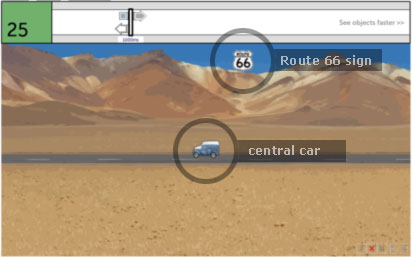
Games always don’t need the flashy graphics paired with capturing audio to make it engaging. Clear objectives and a desire to compete against the self is another effective method for improving skills through a game. According to Mashable, Researchers at the University of Iowa have shown this through their recent success through Road Show, a visual puzzle game aimed at improving senior citizen cognition.

Read More

GSummit 2012 Behind the Scenes: Byron Reeves on Games at Work

(12/26 Gamification Expert Interviews Unlocked)

Every week until GSummit SF 2013, we’ll be unlocking some special content from last year to give you a preview on what to expect this April 16 – 18.

Byron Reeves of Stanford University discusses his research on how people react to games and his fascination towards games emerging in the enterprise:

To see more expert gamification videos, visit our Video page or Subscribe to our YouTube channel! Learn the latest in gamification by going to GSummit SF 2013. Register today!

Image by MridulRaj

Read More

Prominent Gamifiers: Andrea Kuszewski on the Science of Gamification and Motivation

What makes receiving a badge for completing a task so exciting? Why does seeing a progress bar almost full make us itch until we finish it? Gamification—the combination of game-design principles and elements—implements cognitive psychology and decision-making theory as its scientific foundation. If gamification were stuffed shells, science is the shell, and everything else is stuffing.

Read More

Study: First-Person Shooters Can Improve Multitasking Ability

Parents might have a tough time arguing against videogames if their kids begin to learn about all of the potential benefits from playing them.

Just a few days ago, we reported on a study which showed that dyslexic children could improve their reading skills and attention span by playing fast-paced videogames. Now another study has emerged, which has shown playing first-person shooter videogames like Call of Duty can improve multitasking abilities.

Read More

Cancer Research UK Hosts Hackathon to Build a Smartphone Research Game

This past weekend, top developers at Facebook, Google and Amazon Web Services joined research academics and public attendees for a Cancer Research UK hackathon to utilize crowdsourced genetic data and turn it into a smartphone game, tentatively called GeneRun.

The hackathon’s goal is to produce a game that makes use of crowdsourced “citizen scientists” (a la Fold.it) to quickly interpret and analyze data that will facilitate research for cancer drug interventions.

Read More

Using Games in the American Education System with Robert Torres

The Gamification Revolution is the only live gamification webcast featuring Gabe Zichermann and fellow gamification experts every Thursday at 1 PM EST/10 AM PST/1800 GMT. Join us and have all of your gamification questions answered by these experts.

This past week’s guest is Senior Program Officer at the Gates Foundation, Robert Torres! Robert has been working as an education researcher with the Gates Foundation and shares his knowledge on how games are affecting the American Education landscape. You can expect to learn about:

  • How gamification is improving student knowledge assessments
  • The current philosophy of american education
  • Robert’s work with game designers and psychologists to measure game learning effectiveness 
  • The difficulty of knowledge transference between different learning systems
  • The ability for games to promote creative thinking
  • Video game violence and its effect on child behavior

Check out the video below for the full interview:


Download this episode (right click and save)

Be sure to catch this week’s episode featuring the Chief Scientist at Salesforce, JP Rangaswami and learn about his insights on enterprise engagement sciences.

You can now catch the Gamification Revolution every Thursday at 1PM EST/10 AM PST/1800 GMT.

Read More