


Most Office Workers Think Digital Engagement Would Boost Performance

Survey Shows Majority of Employees Would Welcome Game Elements in Daily Tasks Employee engagement is one of the biggest challenges in the business world, yet recent numbers show many companies are missing opportunities to increase worker motivation. A survey conducted by TechnologyAdvice revealed that more than 70 percent of office employees felt digital engagement software…

Read More

Gamification is Scientifically Validated – Now What?

Since the beginning of the gamification movement, we’ve had our fair share of naysayers. Some have been academics, others simply impassioned folks with strong opinions. At their most charitable, these critics have stated – as fact – that basic gamification mechanics simply won’t (can’t) work. At their worst, they’ve accused us of being manipulative, under-informed…

Read More

SCOOP! – A Game That Reduces Math Anxiety

According to The Guardian, as many as 2 million children are believed to be affected by Math anxiety in England alone. The symptoms of Math anxiety may vary, but typically when facing a spike of cortisol (stress hormone) by being presented with a math challenge, the mind of the student with Math anxiety triggers symptoms that reflect stress in the body (tension, sense of paralysis, forgetfulness, sweat, etc). The issue silently sabotages the learning experience of students not only in Math, but across other disciplines from the STEM spectrum that use Math. Fortunately, there have been studies and even a game that aims to help these students cope with the symptoms of Math anxiety.

Read More

Spotlight Expert & GSummit SF 2014 Speaker: Andrea Kuszewski

As we move into our next installment of GSummit (June 10-13 in San Francisco), we look at some of our speakers and experts that have helped shape the gamification & user engagement space. This week’s Spotlight Expert is Andrea Kuszewski (@AndreaKuszewski) — Researcher & Manager, Scientific Vortex Group. Andrea has been one of our top rated speakers at GSummit multiple…

Read More

Study: Playing Video Games Can Increase Brain Size

A study published in PLOS ONE, an online peer-reviewed journal, gives quantitative evidence of what effects video gaming has from a physical, biological perspective. At very least, playing video games can alter your brain.

Studying a mix of 152 teenagers, both boys and girls, testing was done on two areas of the brain: the left dorsolateral prefrontal cortex (DLPFC) and the left frontal eye fields (FEF). What the researchers discovered was that these areas, responsible for executive control, strategic planning, and eye movement relative to “visio-spatial attention” were all positively influenced by video game play in a significant way.

Read More

Research: Can Gaming Influence Racial Bias?

Two different experiments were conducted to find out whether white players assigned to play as black avatars made them more prone to develop racial bias against black people. Each study aimed approached this experiment from two angles, testing different types of game play and testing different degrees of immersion. The results were quite interesting…and probably what you’d expect.

Read More

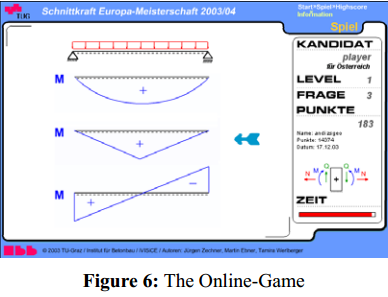
Case Study: Game Based Learning for Civil Engineering

There has been a lot of buzz going on as more schools and universities adopt methods of game based learning. It’s gaining so much ground that studies are emerging to test if game based learning is truly effective. From what the studies have learned thus far , the answer is a resounding “Yes, it is.”

In late 2002, the iVISiCE (interactive Visualization in Civil Engineering) project was founded to assist students of Civil Engineering in their studies. The project was to test if learning by ways of animations and visualizations was more effective than traditional textbook methods.

Read More